A levothyroxine dose that made sense at 45 may be too aggressive at 75. That is not because older adults are “weaker.” It is because aging changes thyroid physiology, heart risk, bone risk, and the margin for error.
Here is the short answer: older adults often start on a lower levothyroxine dose and increase more slowly, especially if they have coronary artery disease, arrhythmia risk, or long-standing hypothyroidism. According to the American Thyroid Association, treatment in older patients may begin at 25 to 50 mcg daily and increase every 6 to 8 weeks. DailyMed labeling for LEVOXYL is even more cautious for elderly patients or those with underlying cardiac disease, recommending a starting dose of 12.5 to 25 mcg per day with increases every 6 to 8 weeks.
That slower pace is not undertreatment. It is safety-focused treatment.
In this guide, you will learn why levothyroxine dosing changes in older adults, what “start low and go slow” really means, how heart disease changes the plan, and what symptoms caregivers should watch after a dose change.
For broader context on day-to-day dosing rules, start with the levothyroxine dosage guide.

Geriatric dosing decisions are usually built in follow-up, not guessed from age alone
The safest dose for an older adult comes from balancing symptoms, TSH, heart history, and how much margin for error the patient has.
Why Levothyroxine Dosing Changes in Older Adults
According to Endotext, older adults often need less levothyroxine than younger adults. In one aging cohort, average replacement needs were closer to about 1.1 mcg/kg/day, not the classic 1.6 mcg/kg/day used for younger adults with full replacement needs.
Several things drive that difference:
- metabolism slows with age
- body composition changes
- mild TSH elevation becomes more common in later life
- overtreatment causes more harm in older adults than in many younger patients
That last point matters most. A slightly cautious dose may leave room for adjustment. An overly aggressive dose can trigger palpitations, angina, atrial fibrillation, insomnia, confusion, and long-term bone loss.
What Dose Do Older Adults Usually Start With?
The right starting dose depends on the situation.
For an otherwise healthy older adult with clear hypothyroidism, clinicians may start at 25 to 50 mcg daily, then adjust based on TSH and symptoms. For an older adult with coronary artery disease, a history of arrhythmia, or concern for frailty, the safer starting point is often 12.5 to 25 mcg daily.
That means a “small” starting dose is not a sign your clinician is ignoring the problem. It usually means they are respecting the heart.
Typical Starting Approach by Scenario
| Situation | Common Starting Pattern | Why |
|---|---|---|
| Healthy older adult | 25-50 mcg daily | Lower needs than younger adults, but not necessarily ultra-low |
| Older adult with heart disease | 12.5-25 mcg daily | Reduces risk of angina, palpitations, and arrhythmia |
| Long-standing severe hypothyroidism | Lower start, slower increases | Rapid correction can stress the cardiovascular system |
| Already on levothyroxine, aging into older adulthood | Reassess ongoing dose needs | A dose that used to fit may become too much over time |
Why Doctors Start Low and Increase Slowly
This is the core geriatric dosing principle.
Levothyroxine has a long half-life, and TSH takes time to equilibrate. According to ATA guidance and Endotext, dose changes are usually followed by repeat TSH testing in about 6 to 8 weeks. Adjusting faster than that often creates confusion because you are changing the dose before the labs can show the full effect.
Heart rhythm and angina risk
Too much thyroid hormone increases heart rate and cardiac demand. In older adults, especially those with coronary artery disease, that can provoke chest pain or rhythm problems.
Sleep, tremor, and nervous system effects
Insomnia, tremor, anxiety, and agitation can show up quickly when the dose is too aggressive. Older adults may also describe feeling “off,” shaky, or mentally overstimulated rather than simply saying they feel hyperthyroid.
Bone risk over time
According to FDA labeling, chronic over-replacement can decrease bone mineral density, especially in postmenopausal women. That risk matters even more when fracture risk is already elevated.
How Heart Disease Changes the Plan
If an older adult has known coronary disease, prior angina, atrial fibrillation, or heart failure history, levothyroxine dosing has to respect that history.
The goal is still to treat hypothyroidism. The difference is pace.
A more cautious plan usually means:
- starting lower
- increasing in smaller steps
- waiting for TSH response before pushing further
- paying close attention to palpitations, chest discomfort, or shortness of breath
If symptoms flare after a dose increase, that does not automatically mean levothyroxine is wrong. It often means the same hormone was increased too quickly for that patient’s cardiovascular reserve.
For related symptom guidance, Heart Palpitations and Levothyroxine belongs on the same reading list.
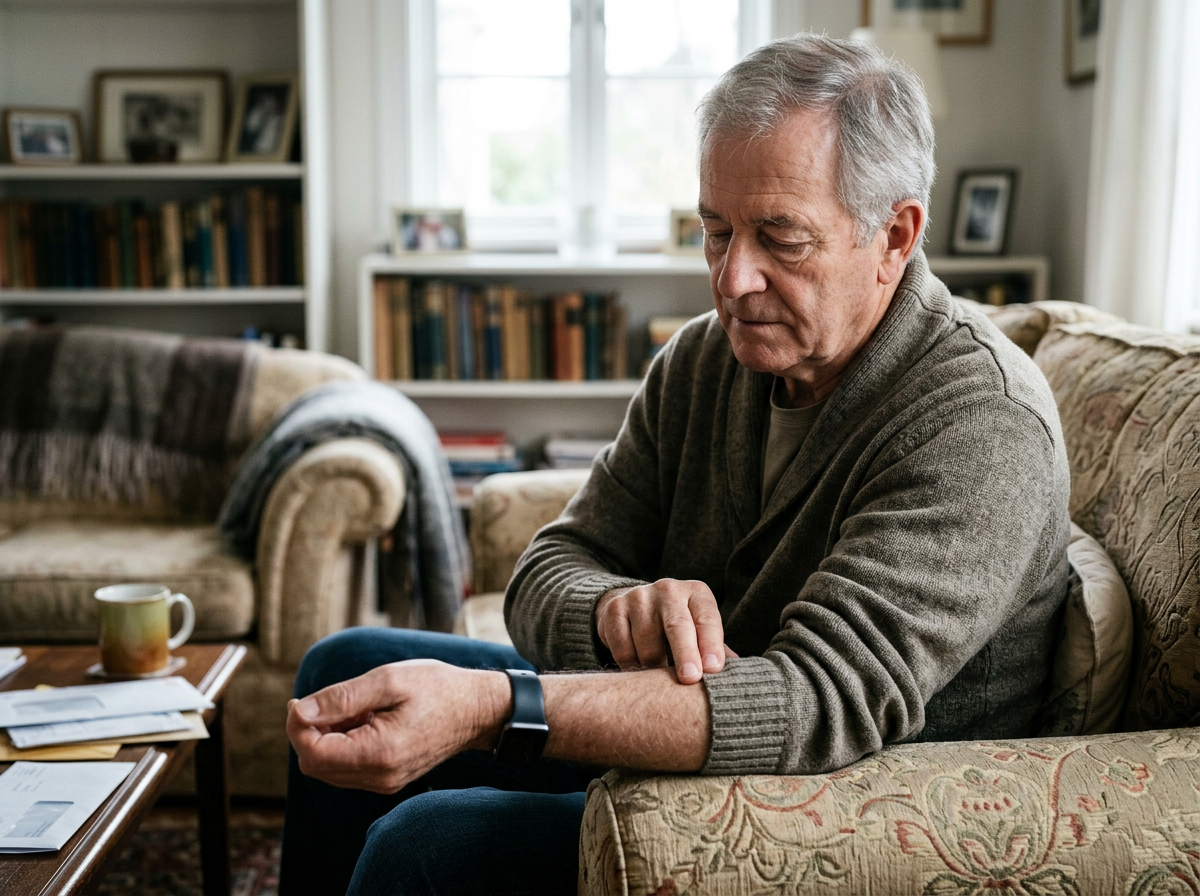
In older adults, a dose that is only a little too high can feel much bigger
Palpitations, tremor, and feeling overstimulated deserve quicker review in seniors because the heart is less forgiving.
What Counts as the Right TSH Target in Older Adults?
This is where nuance matters.
Many adults are taught one universal thyroid target. Older adults are different. Endotext summarizes expert guidance suggesting that acceptable TSH targets may be somewhat higher in older patients, and ATA guidance cited there supports a TSH target of 4 to 6 mIU/L in some adults over 70.
That does not mean everyone over 70 should run a TSH of 5.5. It means clinicians sometimes accept a slightly higher target to avoid the more immediate risks of overtreatment.
In older adults, the bigger mistake is often not mild under-replacement. It is over-replacement.
If your main question is whether treatment should start at all, not just what dose to use, see Subclinical Hypothyroidism: Should You Start Levothyroxine?.
When Mild Hypothyroidism May Not Need Immediate Treatment
Older adults also have a higher chance of subclinical hypothyroidism, meaning TSH is elevated but free T4 remains normal. In that situation, the question is not always “what dose should I start?” Sometimes the real question is whether treatment should start yet.
Observation may be reasonable when:
- TSH is only mildly elevated
- free T4 is normal
- symptoms are vague or absent
- the patient is older and overtreatment risk is meaningful
This is why a mildly high TSH does not always produce an immediate prescription. Sometimes the evidence-based plan is repeat labs, symptom review, and watching the trend.
Monitoring After You Start or Change the Dose
A practical follow-up plan usually looks like this:
- repeat TSH about 6 to 8 weeks after starting or changing the dose
- review symptoms, especially palpitations, insomnia, chest discomfort, tremor, or worsening fatigue
- once stable, continue periodic monitoring, often every 6 to 12 months
- repeat sooner if there is major weight change, a refill switch, new calcium or iron use, or new cardiac symptoms
Older adults are especially likely to have interacting medications. That means a stable dose can become unstable even when the prescription has not changed.
If you need a deeper explanation of how TSH follow-up drives dose changes, read Dose Adjustment and TSH Monitoring.
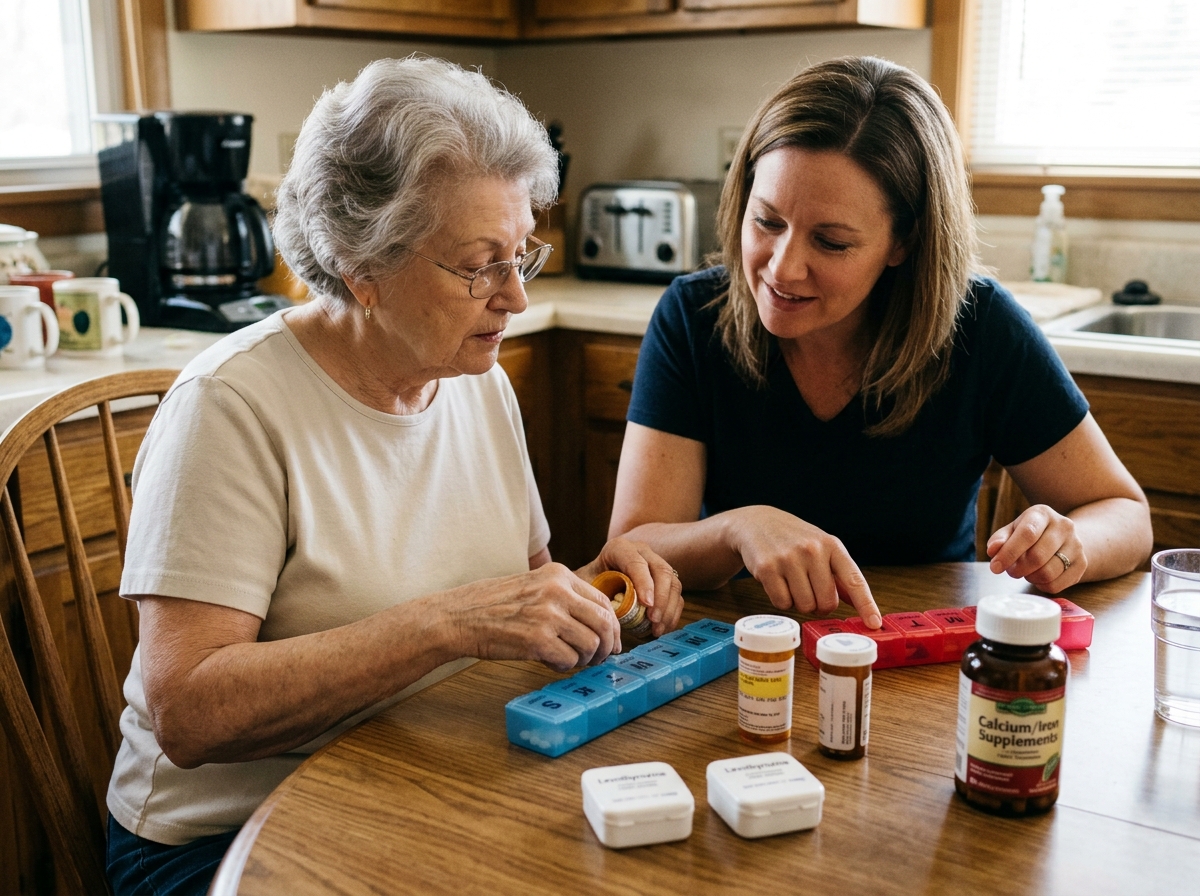
Polypharmacy is one of the main reasons a previously stable dose stops behaving predictably
For many older patients, the real problem is not the prescription itself but the number of competing medications around it.
Common Medication Problems in Older Adults
Polypharmacy is one of the biggest reasons thyroid control drifts in older adults.
According to DailyMed labeling, calcium carbonate, ferrous sulfate, antacids, bile-acid sequestrants, and sucralfate can all reduce levothyroxine absorption.
Common troublemakers include:
- calcium supplements
- iron supplements
- antacids
- proton pump inhibitors
- fiber supplements
- inconsistent refill manufacturers
If TSH suddenly changes, always ask whether something new was added before assuming the thyroid itself changed.
Related reads:
- Levothyroxine and Calcium Supplements
- Levothyroxine and Antacids
- Switching Between Brands and Generics
- How to Read Your Thyroid Lab Results
Signs the Dose May Be Too High in an Older Adult
These symptoms deserve prompt follow-up:
- fast heart rate
- palpitations
- chest pressure or angina
- new insomnia
- tremor
- nervousness
- unexplained weight loss
- feeling overheated or sweaty
Longer term, over-replacement also raises concern about bone loss and fracture risk. A large BMJ study in older adults found a dose-related association between levothyroxine use and fractures, which reinforces why cautious dosing matters in this age group.
Signs the Dose May Still Be Too Low
A cautious starting dose is appropriate. Staying too low forever is not.
Clues the dose may still be insufficient include:
- persistent fatigue
- constipation
- dry skin
- feeling cold
- slow improvement despite good adherence
Symptoms alone do not set the dose. Labs do. But persistent hypothyroid symptoms should trigger a review, not endless waiting.

The goal is not aggressive dosing. It is stable function and safe follow-up.
A well-matched dose supports daily life without pushing the heart, sleep, or bones harder than necessary.
Questions Older Adults and Caregivers Should Ask
- Do heart problems change the safest starting dose for me?
- When should my TSH be checked again?
- Which of my current medications block absorption?
- What symptoms would mean the dose is too aggressive?
- What TSH target makes sense for my age and medical history?
Frequently Asked Questions
Is 25 mcg a normal levothyroxine dose for an older adult?
Yes. In older adults, especially those with heart disease or frailty concerns, 12.5 to 25 mcg can be an appropriate starting dose.
Why do older adults often need less levothyroxine?
According to Endotext, levothyroxine requirements often decrease with age. Lower replacement needs and higher overtreatment risk make cautious dosing more appropriate.
Can a higher TSH be normal with age?
Sometimes. Mild TSH elevation becomes more common with aging, and some expert guidance accepts a somewhat higher target in older adults to reduce overtreatment risk.
What symptoms suggest the dose is too high?
Palpitations, insomnia, tremor, chest pain, nervousness, sweating, and unexplained weight loss are common warning signs.
How often should thyroid labs be checked in seniors?
Usually 6 to 8 weeks after a dose change, then periodically once stable. New symptoms or medication changes may justify earlier testing.
Key Takeaways
- Older adults often need lower starting doses and slower titration.
- Heart disease changes the dosing plan more than almost any other factor.
- In seniors, overtreatment can be more dangerous than cautious under-replacement.
- TSH targets may be somewhat higher in some older adults.
- Polypharmacy commonly explains unstable thyroid labs.
- The right dose is the one that balances labs, symptoms, and safety.
Levothyroxine dosing in older adults is not about doing less. It is about doing it safely. A lower start, slower increase, and more careful follow-up often produce the best long-term outcome.
For the condition-level view, pair this article with Hypothyroidism in the Elderly: Special Considerations.
Sources
- American Thyroid Association. Older Patients and Thyroid Disease. https://www.thyroid.org/thyroid-disease-older-patient/
- DailyMed. LEVOXYL label. https://dailymed-beta.nlm.nih.gov/dailymed/getFile.cfm?setid=758588c3-c63e-491b-0aa2-4f50d80cb174&type=pdf
- Endotext. Hypothyroidism in Older Adults. https://www.ncbi.nlm.nih.gov/sites/books/NBK279005/
- Roberts CGP, et al. Hypothyroidism: challenges when treating older adults. https://pubmed.ncbi.nlm.nih.gov/23244059/
- Turner MR, et al. Levothyroxine dose and risk of fractures in older adults. https://pubmed.ncbi.nlm.nih.gov/21527461/