Your newborn was diagnosed with congenital hypothyroidism on the newborn screening panel. Or your 8-year-old just got hypothyroid. Now your doctor has prescribed levothyroxine—but the dose seems really high compared to what you’d take.
Here’s why: Children need significantly more levothyroxine per kilogram of body weight than adults. A newborn on 50 mcg might seem like a lot for such a tiny person, but it’s actually perfectly appropriate for their metabolism and growth needs.
Your child’s dosing will also change multiple times as they grow. And that’s normal. Growth is driving the changes, not instability of their condition.
In this guide, you’ll learn:
– Why pediatric doses are higher than adult doses (pound-for-pound)
– Age-specific dosing ranges (newborns through teens)
– TSH targets at different ages
– How growth and puberty affect dosing
– The monitoring schedule that keeps your child healthy
– Practical tips for giving medication to children

In pediatric thyroid care, the medication routine starts early and matters immediately
For infants, accurate daily dosing is about growth and brain development, not just symptom control.
Why Children Need Different Dosing
If your 100-pound child is on 125 mcg levothyroxine and you’re on 100 mcg, it might feel backwards. But pediatric dosing works differently than adult dosing, and there are good scientific reasons.
Faster Metabolism in Children
Children’s metabolic rate is significantly faster than adults’. Their bodies burn thyroid hormone more quickly, so they need more per pound of body weight just to maintain the same circulating hormone levels.
Example: An adult might need 1.6 mcg/kg. A newborn needs 10–15 mcg/kg—6–9 times more per kilogram.
Growth Requires Extra Thyroid Hormone
Thyroid hormone fuels growth. Children are literally building new tissue—muscles, bones, organs, brain—at a rapid rate. This requires more thyroid hormone than just maintaining an adult body.
Brain Development Dependence
In infants and young children, adequate thyroid hormone is essential for brain development. Insufficient thyroid hormone in the first few years of life can lead to intellectual disability if untreated. This is why newborn screening for hypothyroidism is standard—early treatment literally protects brain development.
Age-by-Age Dosing Guide
Congenital Hypothyroidism: Newborns (0–3 months)
Starting dose: 10–15 mcg/kg (usually 25–50 mcg total)
Why so high?: Newborns have the highest dosing needs per kilogram because:
– Brain development is critical
– Metabolism is fastest
– Even small hormone deficiencies can impact development
Monitoring: TSH checked at 2 weeks, then every 2 weeks for the first 3 months, then every 1–3 months during the first year.
Adjustment pattern: Dose usually increases every 2–4 weeks as the baby grows.
Liquid formulation: Newborns typically get liquid levothyroxine since they can’t swallow tablets.
Real scenario: Baby Emma was diagnosed with congenital hypothyroidism and started on 25 mcg. At 2 weeks, her TSH was high, so her dose increased to 37.5 mcg. At 6 weeks, she needed 50 mcg. By 4 months, she stabilized at 75 mcg. This rapid titration is completely normal and necessary.
Infants (4–12 months)
Typical dose: 50–75 mcg
Dosing approach: Weight-based during infancy (typically 10–12 mcg/kg)
Monitoring: Every 3–4 weeks during adjustment phase, then every 2–3 months when stable
TSH target: 1.0–3.0 mIU/L (slightly higher target acceptable in infants)
Formulation: Liquid or compounded tablets
What parents worry about: Infants often spit up or refuse medication. Some liquid formulations taste better than others—ask your pharmacist about flavoring options.

As children grow, the medication routine has to grow with them
Toddlers often need a very different administration strategy than infants, even though consistency is still doing the same job.
Toddlers (1–3 years)
Typical dose: 50–75 mcg (increasing with growth)
Dosing approach: Weight-based, typically 8–10 mcg/kg
Monitoring: Every 6–12 weeks during adjustment, then every 6 months when stable
TSH target: 0.5–3.5 mIU/L
Formulation transition: Many toddlers can transition from liquid to small tablets by age 2–3.
Challenges: Getting toddlers to take medication is tough. Options include:
– Crushing tablets and mixing with applesauce (ask your pharmacist if your formulation can be crushed)
– Liquid formulation (usually tastes better to kids)
– Positive reinforcement (sticker chart, praise)
Early Childhood (4–8 years)
Typical dose: 75–100 mcg (increasing with growth)
Dosing approach: 6–8 mcg/kg
Monitoring: Every 6–12 months (more stable phase)
TSH target: 0.5–3.5 mIU/L
Formulation: Tablets (most children can swallow by age 4–5)
School considerations: Some parents give the dose before school. Others do it at bedtime (which works just fine). Consistency matters more than timing.
Social considerations: Kids become aware they’re “taking medicine.” Normalize it as part of their routine, like brushing teeth.
Older Children (9–12 years)
Typical dose: 100–125 mcg (depending on growth)
Dosing approach: 4–6 mcg/kg (approaching adult ratios)
Monitoring: Every 6–12 months
TSH target: 0.5–5.0 mIU/L (approaching adult range)
Independence: By 10–12, many kids can manage taking their own medication. Build responsibility gradually—they remind you first, then you watch them, then they do it independently.
Growth spurts: If your child has a growth spurt (which shows on growth charts), their TSH might drift higher, signaling a needed dose increase.
Adolescents (13–18 years)
Typical dose: 100–150 mcg (adult range being approached)
Dosing approach: 2–4 mcg/kg (similar to adults)
Monitoring: Every 6–12 months, then annually when stable
TSH target: 0.5–5.0 mIU/L (adult range)
Puberty and dosing: Pubertal growth spurts increase hormone needs. Expect dose increases during puberty if your teen hasn’t stabilized yet.
Transition planning: By 16–18, teens should understand their own condition and be prepared to manage it as adults (taking dose independently, understanding TSH, asking for refills).
Weight-Based Dosing Formula
If you want to understand why your child’s dose is what it is:
Dose (mcg) = Child’s weight (kg) × mcg/kg guideline
Example: An 10 kg (22 lb) infant on 10 mcg/kg dosing:
– 10 kg × 10 mcg/kg = 100 mcg
The mcg/kg varies by age:
– Newborns: 10–15 mcg/kg
– Infants: 10–12 mcg/kg
– Young children (1–5 yrs): 8–10 mcg/kg
– Children (6–12 yrs): 4–6 mcg/kg
– Adolescents (13+): 2–4 mcg/kg
As children age and approach adult metabolism, the per-kilogram requirement drops.
TSH Targets by Age
Your child’s TSH target isn’t the same as an adult’s. Here’s why:
| Age | TSH Target | Why |
|---|---|---|
| Newborn–1 year | 1.0–3.0 mIU/L | Brain development priority, slightly higher targets OK |
| 1–5 years | 0.5–3.5 mIU/L | Growth and development |
| 6–12 years | 0.5–3.5 mIU/L | Stable childhood, similar to young children |
| 13+ years | 0.5–5.0 mIU/L | Approaching adult range as development completes |
Important: These are targets, not hard walls. Your child’s doctor might aim slightly higher or lower depending on individual factors (growth rate, symptoms, dose stability).
Monitoring Schedule for Children
Regular TSH monitoring is how your doctor knows if the dose is right.
Initial/Adjustment Phase
- Newborns: TSH at 2 weeks, 4 weeks, 8 weeks, then every 4–6 weeks until stable
- Infants/toddlers: Every 4–8 weeks during dose adjustment
- Older children: Every 6–8 weeks during dose adjustment
Stable Phase
- Once stable: Every 6–12 months
- After dose adjustment: Recheck TSH 4–6 weeks later to confirm the new dose is working
- Annually at minimum: Even stable kids need yearly monitoring
Extra Monitoring
- Growth spurt: If TSH climbs, indicate growing needs
- Medication changes: If other medications start, TSH might shift
- Illness: Significant illness can affect absorption
- Approaching adolescence: Pubertal growth requires monitoring

By school age, the goal is a routine that works in real family mornings
The best pediatric dosing plan is the one a child can follow consistently through school, growth spurts, and ordinary life.
Practical Tips for Giving Levothyroxine to Children
Infants (0–12 months)
- Timing: Preferably before breakfast (30 minutes before food)
- Method: Liquid with dropper, given on the side of the mouth so it goes down the throat
- Consistency: Always same time of day
- Spit-up: If baby spits up within 30 minutes, ask your doctor if you should redose
Toddlers (1–3 years)
- Make it routine: Same time every morning, like before getting dressed
- Liquid or crushed: Many toddlers do better with liquid than tablets
- Mix strategically: If allowed by your pharmacist, mix crushed tablet with applesauce or yogurt (take before other foods)
- Reward systems: Sticker charts, praise—make it positive
School-Age Children (4–12 years)
- Before school or after-school: Either works; consistency is key
- Tablet form: Most children can swallow tablets by age 5–6
- Supervised: At least initially, you watch to confirm they took it
- Normalize it: Treat it like brushing teeth—routine, not optional
Adolescents (13–18 years)
- Build independence: By mid-teen years, they should manage it themselves
- Use reminders: Phone alarms, calendar alerts, pill organizers
- Communication: Regular check-ins about how they’re feeling
- Education: Teach them why they take it (not just “because mom said”)
Growth and Development: When Doses Change
Your child’s levothyroxine dose will likely increase several times before they’re fully grown. Here’s what drives the changes:
Growth Spurts
During growth spurts, your child’s metabolism increases and body size increases. Their levothyroxine needs go up. This typically shows up as a TSH creeping upward during the next lab check.
Pattern:
– You notice your child growing quickly
– At the next TSH check, it’s higher than last time
– Doctor increases the dose
– TSH normalizes again
Pubertal Growth
Puberty is the biggest growth and metabolic change after infancy. Most teens need dose increases during pubertal years.
What to expect:
– TSH might drift higher as puberty begins
– Doses might increase 1–3 times during teen years
– By age 16–18, most teens stabilize on an adult-range dose
Growth Charts
Your pediatrician tracks your child’s growth on a growth chart. If growth is accelerating (moving up percentile-wise), increased hormone needs often follow.
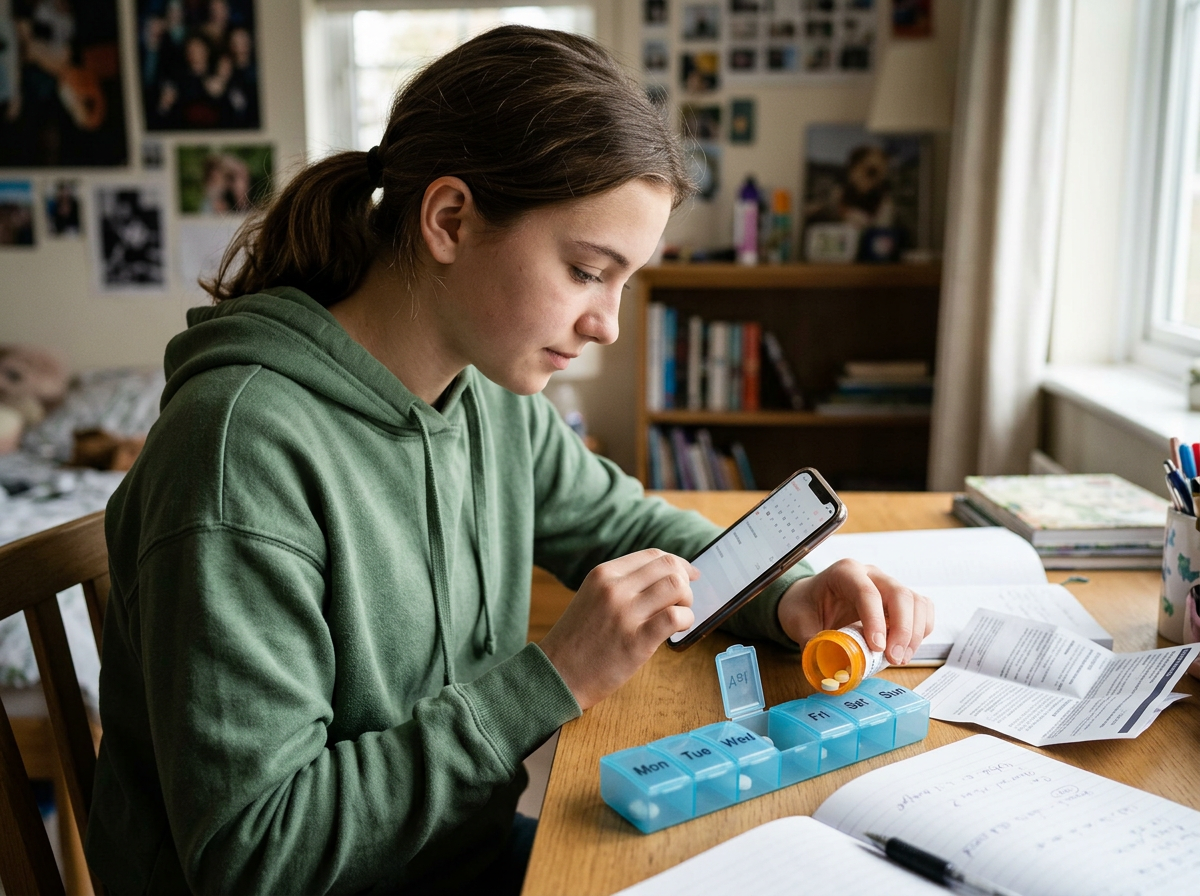
The long-term win is not just normal labs. It is growing into independence.
By adolescence, the routine should begin shifting from parent-managed treatment toward confident self-management.
Special Pediatric Situations
Congenital Hypothyroidism with Special Circumstances
Some newborns have additional complications:
– Premature infants: Dosing adjusted downward initially, then titrated up
– Low birth weight: Lower starting dose, careful monitoring
– Other conditions: Down syndrome, cardiac issues—may require adjusted dosing
Malabsorption in Children
Celiac disease, Crohn’s, or other conditions that reduce absorption are more common in children than people realize.
Signs: TSH creeps up despite adequate dosing, or your child isn’t growing as expected.
Solution: Liquid levothyroxine (absorbed differently), or dose adjustment, plus treating the underlying malabsorption condition.
Medication Interactions in Children
If your child takes other medications (antibiotics, ADHD meds, etc.), some can interfere with levothyroxine absorption.
Rule: Space levothyroxine 4 hours away from:
– Iron supplements
– Calcium supplements
– Antacids
– High-fiber supplements
Transitioning to Adult Care
By late teens (typically 16–18), your child should be transitioning to self-management. This includes:
- Understanding their condition: Why they take levothyroxine, what happens if they skip doses
- Managing their medication: Taking doses independently, understanding TSH, requesting refills
- Doctor communication: Speaking up at appointments, asking questions
- Transition timing: Around 18, consider transitioning to an adult endocrinologist
This transition isn’t about age; it’s about readiness. Some teens are ready at 15; others at 19. Work with your pediatrician on the timeline.
Frequently Asked Questions
Q: Why does my infant need such a high dose?
A: Newborns have the fastest metabolism per kilogram and need high hormone levels for critical brain development. The dose seems high because infants need 6–9 times more per kilogram than adults.
Q: Will my child’s dose change a lot as they grow?
A: Yes. Expect increases every 6–12 months during childhood, with bigger jumps during growth spurts and puberty. This is normal and doesn’t mean their condition is unstable.
Q: Can my child take levothyroxine with breakfast?
A: Not ideally—empty stomach absorption is better. But if you must, apply the same timing rule as adults: 30–60 minutes before food. If your child can’t manage that, talk to your doctor about liquid formulation or different timing.
Q: When will my child’s TSH be “normal” like an adult’s?
A: Usually by late teens. TSH targets actually shift gradually with age as metabolism slows and brain development completes.
Q: Do children eventually outgrow hypothyroidism?
A: No. Congenital hypothyroidism is lifelong. But after diagnosis and treatment, children develop completely normally and typically need no special accommodations. They simply take levothyroxine indefinitely.
Q: How do I help my child remember to take their medication?
A: Use consistent timing (same time every day), pair it with an existing habit (before breakfast, after brushing teeth), use reminders/alarms, and as they age, teach them to own the responsibility.
Key Takeaways
- Children need more levothyroxine per kilogram than adults because of faster metabolism and growth demands
- Doses increase regularly as children grow—expect adjustments every 6–12 months
- TSH targets are age-specific—they’re different for infants, children, and adolescents
- Monitoring is frequent in early years (every 2–4 weeks) and less frequent once stable (every 6–12 months)
- Build independence gradually—by mid-teens, children should understand their condition and manage their own medication
- Growth is normal—if your child’s TSH drifts up, a dose increase usually gets them back on track
Your child’s levothyroxine dose is a moving target because they’re a growing human. The goal is to give them enough hormone to support normal growth and development, while avoiding too much (which causes symptoms of hyperthyroidism). Your pediatrician uses TSH labs and growth patterns to dial in the right dose. Trust the monitoring process, ask questions when something doesn’t feel right, and know that with appropriate treatment, children with hypothyroidism grow up completely normally.