Key Takeaways
– The standard adult starting dose is approximately 1.6 mcg per kg of body weight per day, per ATA guidelines
– Elderly patients and those with heart disease start at a much lower dose, typically 12.5–25 mcg/day, to avoid cardiac stress
– Children require significantly higher doses per kilogram than adults; neonates may need up to 10–15 mcg/kg/day
– Your starting dose is almost always temporary. TSH is rechecked in 4–6 weeks and the dose is adjusted from there
– Pregnancy typically requires a dose increase of 25–30% or more, beginning as early as the first trimester
Introduction
When Maria was diagnosed with hypothyroidism at age 42, her doctor handed her a prescription for 100 mcg of levothyroxine and said they would “check in six weeks.” She left with more questions than answers: Why 100 mcg specifically? Is that high? Is it low? What happens if it’s wrong?
The answer her doctor could have given: your starting dose was calculated using a straightforward formula based on your body weight, your age, and the severity of your thyroid deficiency. It is not a final answer, it is an educated first estimate.
This article explains exactly how levothyroxine starting doses are determined, why they differ for different patient populations, and what the dose-finding process looks like in practice. Every figure and recommendation cited here comes directly from the FDA prescribing information for levothyroxine or published clinical guidelines from the American Thyroid Association (ATA).
If you want the full picture of how dosing works over time, including how and when doses get adjusted, see our levothyroxine dosage and administration guide.

A starting dose usually comes from a formula plus clinical judgment
Weight, age, severity, and the patient’s broader health are what turn a diagnosis into a first prescription.
What Is the Standard Starting Dose of Levothyroxine?
The 1.6 mcg/kg Formula Explained
According to the American Thyroid Association’s clinical guidelines for hypothyroidism, the standard full-replacement dose of levothyroxine for otherwise healthy adults is approximately 1.6 micrograms (mcg) per kilogram of body weight per day.
This formula applies to patients who need complete thyroid hormone replacement, typically those with primary hypothyroidism from Hashimoto’s thyroiditis, thyroid removal, or radioactive iodine treatment, where the thyroid produces little to no hormone on its own.
The FDA prescribing information for levothyroxine confirms this range: typical full replacement doses fall between 100 and 125 mcg per day for a 70 kg (154 lb) adult, though individual variation is common.
How to Calculate Your Approximate Dose
Using the 1.6 mcg/kg formula is straightforward:
- Convert your weight to kilograms (divide pounds by 2.2)
- Multiply by 1.6
Example: A 165-pound (75 kg) person: 75 × 1.6 = 120 mcg/day
Levothyroxine comes in standardized tablet strengths (25, 50, 75, 88, 100, 112, 125, 137, 150, 175, 200 mcg). A prescriber would typically round to the nearest available strength, so 120 mcg would likely be prescribed as 125 mcg.
This formula gives a starting target. It is not a guarantee of where you will end up.
Starting Dose vs. Maintenance Dose: What Is the Difference?
Many patients assume their first prescription is their permanent dose. It rarely is.
The starting dose is a calculated estimate designed to bring TSH into a normal range without overshooting. Your actual maintenance dose, the dose that keeps your TSH stable month to month, is determined through a series of TSH checks and adjustments over the first several months of treatment.
Per ATA guidelines, TSH should be rechecked 4 to 6 weeks after initiating therapy. Because levothyroxine has a long half-life (approximately 7 days), it takes five to six weeks to reach steady-state blood levels, which is why checking sooner rarely gives an accurate picture.
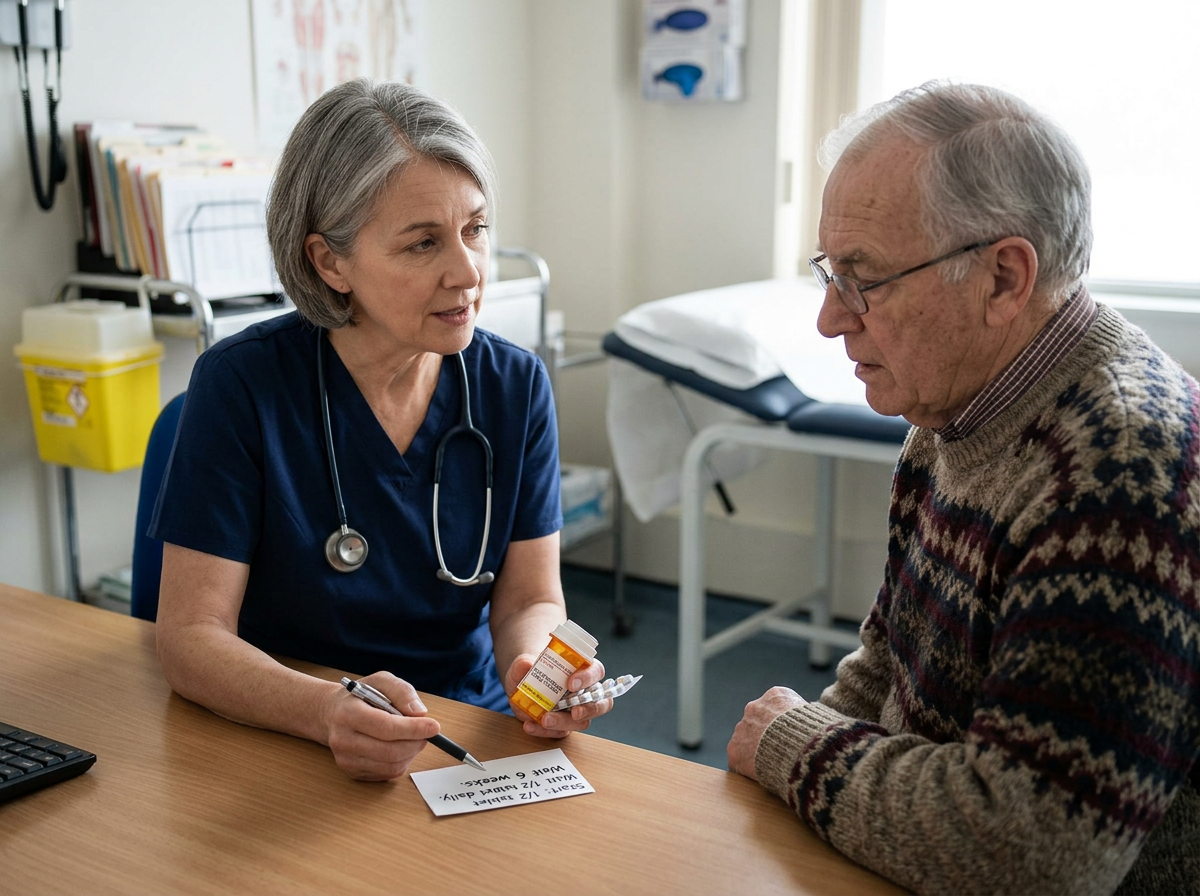
The starting point changes when the patient changes
Healthy adults, heart patients, older adults, and pregnant patients rarely all start in the same place.
Starting Dose by Patient Population
Healthy Adults Under 65
For otherwise healthy adults younger than 65 with newly diagnosed hypothyroidism, the full weight-based dose (around 1.6 mcg/kg/day) is appropriate from the start. Per the FDA prescribing information, these patients can generally tolerate full replacement dosing immediately, there is no clinical reason to titrate slowly.
This population typically reaches a stable maintenance dose within 3 to 6 months after the initial prescription, following one or two dose adjustments based on TSH results.
Adults Over 65 and Patients With Heart Disease
The calculation changes significantly for older adults and for patients with known or suspected cardiovascular disease.
According to the FDA prescribing information, starting full replacement doses in these groups can exacerbate pre-existing cardiac conditions, including angina, arrhythmias, and in rare cases, cardiac events. The FDA label explicitly states that levothyroxine should be initiated at lower doses in these populations, with gradual upward titration.
In practice, according to ATA guidelines, elderly patients and those with heart disease are typically started at:
– 12.5 to 25 mcg per day
– Dose is increased by 12.5 to 25 mcg every 4 to 6 weeks
– Target remains TSH normalization, but the path is slower
David, a 71-year-old with a history of atrial fibrillation, was diagnosed with hypothyroidism after a routine blood panel. His cardiologist and endocrinologist agreed to start at 25 mcg, a fraction of what his weight-based calculation suggested, and increase by 25 mcg every six weeks. It took four months to reach his maintenance dose. The slower approach was intentional: sudden large increases in thyroid hormone can increase heart rate and worsen arrhythmia.
Pregnancy
Pregnancy is the most dynamic dosing scenario for levothyroxine. Per ATA guidelines, thyroid hormone demand increases by approximately 25 to 30% during the first trimester, as the fetus depends on maternal T4 before its own thyroid gland becomes functional (around 16–20 weeks gestation).
For women already taking levothyroxine before becoming pregnant, the ATA recommends increasing the dose by 25 to 30% as soon as pregnancy is confirmed, or even proactively once a woman starts trying to conceive.
For women newly diagnosed with hypothyroidism during pregnancy, the starting dose is typically the full replacement dose calculated by weight, not the gradual titration approach used in elderly patients. The urgency of adequate thyroid hormone during early pregnancy overrides the conservative start used in other contexts.
A detailed breakdown of dose adjustments across each trimester is covered in our article on levothyroxine dosage during pregnancy.
Subclinical Hypothyroidism: Why Starting Doses Are Lower
Subclinical hypothyroidism is defined as an elevated TSH with a normal free T4 level, meaning the thyroid is struggling but still producing some hormone. Not all cases require treatment, but when treatment is initiated, the approach differs from full replacement.
Per the ATA’s clinical guidance, patients with subclinical hypothyroidism who are treated typically start at lower doses, often 25 to 50 mcg per day, because the goal is to normalize TSH rather than replace absent thyroid function entirely. Starting at full replacement doses in these patients risks pushing TSH below normal range (overtreatment), which carries its own risks, particularly for bone density and heart rhythm.

Pediatric dosing is its own category, not a smaller adult dose
Children often need a very different dose per kilogram, which is why parents are often surprised by the numbers at first.
Pediatric Levothyroxine Dosing: A Complete Chart
Children require considerably higher levothyroxine doses per kilogram of body weight than adults. This is because thyroid hormone plays a critical role in neurological development, growth, and metabolic rate, all of which are proportionally more active in children.
Per the FDA prescribing information, the recommended daily levothyroxine dose for children varies by age:
| Age Group | Dose (mcg/kg/day) |
|---|---|
| 0–3 months | 10–15 |
| 3–6 months | 8–10 |
| 6–12 months | 6–8 |
| 1–5 years | 5–6 |
| 6–12 years | 4–5 |
| 12+ years (growth complete) | 2–3 |
| Adults | ~1.6 |
Note how the dose per kilogram decreases as children age, eventually converging near the adult dose once growth is complete.
Why Children Need Higher Doses Per Kilogram
The higher mcg/kg requirement in infants and young children reflects the proportionally higher metabolic demands of growing tissue and the outsized role thyroid hormone plays in brain development during the first three years of life.
Per ATA and Endocrine Society guidelines, inadequate thyroid hormone replacement in neonates and infants can cause permanent intellectual disability. This is why newborn screening for congenital hypothyroidism is standard of care in most countries, and why treatment is initiated within the first few weeks of life.
Congenital Hypothyroidism: Urgency Matters
For infants diagnosed with congenital hypothyroidism (absent or underdeveloped thyroid), the FDA prescribing information specifies a starting dose of 10–15 mcg/kg/day, with the higher end of that range used for more severe cases. Treatment is initiated as early as possible, typically within the first two to four weeks of life.
Parents navigating a congenital hypothyroidism diagnosis should work closely with a pediatric endocrinologist, as dosing adjustments will be frequent in the first year of life as the child grows and thyroid demand changes.
If your child has been prescribed levothyroxine, our levothyroxine dosage guide includes additional context on administration in pediatric patients.

Starting dose is the beginning of a process, not the final destination
The most important thing about the first dose is often what happens at the first recheck after it.
Why Your Starting Dose Will Almost Certainly Change
Understanding this upfront removes a lot of anxiety from the treatment process: the first dose your doctor prescribes is rarely the last.
What TSH Monitoring Tells Your Doctor
TSH, thyroid-stimulating hormone, is the primary marker used to evaluate whether your levothyroxine dose is adequate. When TSH is too high, it signals the pituitary is working overtime because thyroid hormone levels are still low, your dose likely needs to go up. When TSH is too low, there is more thyroid hormone than needed, your dose may need to come down.
Per ATA guidelines, the target TSH range for most hypothyroid patients on levothyroxine is 0.5 to 4.5 mIU/L, though the ideal target may vary based on age, symptoms, and individual factors your provider will consider.
For a deeper explanation of what your TSH number actually means, see our guide on how to read your thyroid lab results.
How Quickly Will I Know If My Dose Is Right?
Because of levothyroxine’s seven-day half-life, it takes approximately five to six half-lives, about five to six weeks, for the drug to reach stable blood levels (steady state). This is why the ATA recommends rechecking TSH no sooner than four weeks after starting or changing a dose.
Checking too early will show TSH values that are still shifting and may lead to unnecessary dose changes. Checking at the four to six week mark gives an accurate assessment of how your body is responding to the current dose.
Most patients require at least one dose adjustment before reaching a stable long-term maintenance dose. A detailed guide to how doses are monitored and adjusted is covered in our article on dose adjustment and TSH monitoring.
Questions to Ask Your Healthcare Provider
Based on what the research and clinical guidelines say, here are specific questions worth raising at your appointment:
- “How was my starting dose calculated, is it based on my weight, my TSH level, or both?”
- “Given my age and health history, should we start at full replacement or titrate up slowly?”
- “When should I come back to recheck my TSH, and what range are we targeting?”
- “Are there medications or supplements I take that could affect how my body absorbs levothyroxine?” (See our complete interactions guide)
- “If I’m planning a pregnancy, should we adjust my dose before I conceive?”
Frequently Asked Questions
What is the average starting dose of levothyroxine for adults?
According to the American Thyroid Association, the standard full-replacement starting dose for otherwise healthy adults is approximately 1.6 mcg per kilogram of body weight per day. For a 70 kg (154 lb) adult, that works out to roughly 112 mcg/day. However, elderly patients and those with heart disease are typically started at much lower doses, 12.5 to 25 mcg per day, and titrated slowly.
How is levothyroxine dose calculated by weight?
The formula is straightforward: multiply your weight in kilograms by 1.6 to get the approximate daily dose in micrograms. To convert pounds to kilograms, divide your weight in pounds by 2.2. The actual prescribed dose will be rounded to the nearest available tablet strength.
Why do elderly patients start on a lower levothyroxine dose?
Per the FDA prescribing information, starting elderly patients or those with heart disease on full replacement doses can stress the cardiovascular system and worsen conditions like angina or arrhythmia. Starting low and increasing gradually reduces that risk while still moving toward TSH normalization.
How long does it take to know if your levothyroxine dose is correct?
Levothyroxine has a half-life of approximately seven days, so it takes five to six weeks to reach steady-state blood levels. Per ATA guidelines, TSH should be rechecked no sooner than four weeks after starting or adjusting a dose to get an accurate assessment.
Does weight affect levothyroxine dosage?
Yes. Body weight is the primary factor in calculating the initial dose for full replacement therapy, using the 1.6 mcg/kg guideline. However, weight alone does not determine the final dose, TSH response, age, other health conditions, and absorption factors all play a role in dose refinement over time.
What is the maximum starting dose of levothyroxine?
There is no universal maximum starting dose, but the full-replacement calculation (1.6 mcg/kg) represents the upper end of what is typically prescribed at initiation for healthy adults. Doses above this level are sometimes used for TSH suppression therapy, for example, after thyroid cancer surgery, but these are typically initiated and managed by an endocrinologist.
Is 50 mcg of levothyroxine a low dose?
50 mcg is considered a low to moderate dose for adults. For a 70 kg person, the full replacement calculation would suggest approximately 112 mcg/day, so 50 mcg represents less than half of what would normally be considered a full replacement dose. A dose of 50 mcg may be appropriate for subclinical hypothyroidism, for elderly patients starting treatment, or as an intentional starting point that will be titrated upward.
Can your starting dose of levothyroxine be too high?
Yes. If the starting dose is too high, TSH can drop below normal range, a state called over-replacement or iatrogenic hyperthyroidism. Symptoms can include heart palpitations, tremors, anxiety, insomnia, and unexplained weight loss. Per the FDA label, over-replacement also increases the long-term risk of atrial fibrillation and reduced bone density. This is why starting conservatively and monitoring with TSH checks is the standard approach.
What is the levothyroxine starting dose for children?
Per the FDA prescribing information, pediatric dosing is significantly higher per kilogram than for adults. Infants 0–3 months require 10–15 mcg/kg/day; children aged 1–5 years require 5–6 mcg/kg/day; and adolescents (12+, growth complete) require 2–3 mcg/kg/day. The higher per-weight dose in young children reflects thyroid hormone’s critical role in brain development and growth during early childhood.
Should my levothyroxine dose change if I gain or lose weight?
Significant weight changes can shift the appropriate dose, since the formula is based on body weight. The ATA recommends rechecking TSH if you experience a weight change of 10% or more. However, dose adjustments are always based on actual TSH results, not weight changes alone.
Sources
- American Thyroid Association (ATA). “2014 Guidelines for the Treatment of Hypothyroidism.” Thyroid. 2014;24(12):1670–1751. https://www.thyroid.org/professionals/ata-professional-guidelines/
- FDA Prescribing Information, Levothyroxine Sodium Tablets (Synthroid). AbbVie Inc. Current label. https://www.accessdata.fda.gov/drugsatfda_docs/label/2017/021402s027lbl.pdf
- Garber JR, et al. “Clinical Practice Guidelines for Hypothyroidism in Adults: Cosponsored by the American Association of Clinical Endocrinologists and the American Thyroid Association.” Thyroid. 2012;22(12):1200–1235. https://pubmed.ncbi.nlm.nih.gov/22954017/
- Alexander EK, et al. “2017 Guidelines of the American Thyroid Association for the Diagnosis and Management of Thyroid Disease During Pregnancy and the Postpartum.” Thyroid. 2017;27(3):315–389. https://pubmed.ncbi.nlm.nih.gov/28056690/
- Rose SR, et al. “Update of Newborn Screening and Therapy for Congenital Hypothyroidism.” Pediatrics. 2006;117(6):2290–2303. https://pubmed.ncbi.nlm.nih.gov/16740880/