You may have had a DEXA scan that showed osteopenia. Or maybe you read that thyroid medication can weaken bones and now every refill feels a little more concerning. That anxiety is understandable, especially if you expect to take levothyroxine for years.
Here is the short answer: bone density problems linked to levothyroxine usually come from taking too much thyroid hormone for too long, not from thyroid replacement itself when the dose is appropriate. Current DailyMed prescribing information warns that thyroid hormone over-replacement can increase bone resorption and decrease bone mineral density. The key phrase is over-replacement.
That distinction matters because many patients who need levothyroxine can take it long term without harming their bones. The real risk appears when thyroid levels drift too high, especially in older adults, postmenopausal women, and patients who stay slightly overtreated for months or years.
In this guide, you will learn what bone density concerns on levothyroxine usually mean, who is most vulnerable, what research says about fracture risk, and what next steps are worth discussing with a clinician.

The bone-density question usually starts with a scan result, not a symptom
What patients want to know first is whether the low result reflects age, menopause, a suppressed TSH pattern, or something broader than the thyroid prescription alone.
What Does Bone Density and Levothyroxine Usually Mean?
Most of the time, this question is really about one of three situations:
- you already have osteopenia or osteoporosis and want to know whether levothyroxine will make it worse
- your TSH has been low and you are worried the dose has been too high
- you heard that thyroid hormone and bone loss are connected and want to know whether that applies to normal replacement therapy
Those are not the same problem.
According to current DailyMed labeling, levothyroxine-related bone risk is tied to thyroid hormone over-replacement. In plain language, that means the medication is pushing your body into a state that behaves more like hyperthyroidism than normal replacement.
The American Thyroid Association has made the same point in patient guidance: high thyroid hormone levels, whether from an overactive thyroid or from taking too much thyroid hormone, can increase bone turnover and lead to bone loss. That is very different from saying every patient on levothyroxine is damaging their skeleton.
For most patients, the better question is:
Am I taking the right amount for my body right now, or has my dose drifted too high over time?
Why Too Much Thyroid Hormone Can Lower Bone Density
Bone is constantly being remodeled. Old bone is broken down and new bone is built. Too much thyroid hormone speeds that cycle up. When bone breakdown starts outpacing bone rebuilding, bone mineral density can fall.
That is why official labeling tells prescribers to use the lowest effective dose and monitor carefully. The concern is strongest when patients remain chronically over-replaced rather than briefly adjusting to a new dose.
This is also why bone risk is not all-or-nothing. It exists on a spectrum:
- a well-monitored replacement dose has a different risk profile from suppressive therapy
- a slightly low TSH once is different from a persistently suppressed TSH for years
- a healthy 30-year-old has more skeletal reserve than a postmenopausal woman with fracture risk
One practical way to think about it is this: levothyroxine itself is not the usual bone problem. An unrecognized hyperthyroid pattern on levothyroxine is the bone problem.

Bone risk becomes more meaningful when it sits inside an over-treatment pattern
Low TSH matters more when it shows up with palpitations, heat intolerance, tremor, or weight loss rather than as an isolated lab number.
When Bone Density Concerns Suggest Too Much Thyroid Hormone
Bone loss from thyroid hormone is usually not the only clue. It often sits beside a broader over-treatment pattern.
Symptoms or findings that make excess thyroid hormone more plausible include:
- low or suppressed TSH on repeat testing
- heart palpitations
- fast pulse
- heat intolerance
- tremor
- insomnia
- nervousness or feeling unusually wired
- unexplained weight loss
According to the FDA label, TSH should be reassessed about 6 to 8 weeks after a dose change and periodically during stable treatment. If your TSH has stayed below range and nobody has revisited the dose, that matters much more than the fact that you are taking levothyroxine at all.
This is especially important in older adults. A large BMJ nested case-control study in older patients found that levothyroxine exposure, particularly at higher doses, was associated with greater fracture risk. The implication is not that older adults should avoid treatment. The implication is that they have less margin for chronic overtreatment.
If you also have palpitations or a “too much thyroid hormone” symptom pattern, Heart Palpitations and Levothyroxine and Dose Adjustment and TSH Monitoring are the most useful follow-up reads.
When Bone Density Problems May Have Another Cause
A low bone-density result does not automatically mean levothyroxine caused it.
Other common contributors include:
- postmenopausal estrogen loss
- aging
- family history of osteoporosis
- steroid use
- low calcium or vitamin D intake
- smoking
- heavy alcohol use
- low body weight
- limited weight-bearing exercise
- kidney disease or parathyroid disease
That is why it helps to step back from the prescription bottle for a moment. If your thyroid labs have been stable and in range, blaming levothyroxine alone may miss the real explanation.
Think of Elena, age 67, who has been on the same dose for years. Her new DEXA scan shows osteopenia, so she assumes the medication caused it. But her TSH has stayed normal, she went through menopause long ago, she takes prednisone several times a year for lung disease, and she rarely does resistance exercise. In that scenario, the thyroid medication may be part of the conversation, but it is probably not the whole story.
On the other hand, if Elena’s TSH had been suppressed for the last two years and she also had new palpitations and weight loss, the levothyroxine dose would move much higher on the list.
Who Is at Highest Risk?
Some patients need tighter follow-up because the consequences of over-replacement are more serious or show up faster.
The higher-risk groups include:
- postmenopausal women
- adults over 60
- anyone with known osteopenia or osteoporosis
- patients with prior fragility fracture
- people with long-term TSH suppression after thyroid cancer treatment
- patients with atrial fibrillation or other cardiovascular disease
That does not mean these patients should avoid levothyroxine. It means the safest plan is more deliberate monitoring and less casual dose drift.
What the Research and Official Guidance Emphasize
The source pattern is pretty consistent.
According to current DailyMed labeling, decreased bone mineral density is associated with thyroid hormone over-replacement, and the recommendation is to use the lowest effective dose. The FDA label and ATA patient materials also emphasize regular follow-up because the right dose can change over time with age, weight change, pregnancy, medication changes, and absorption issues.
The ATA’s bone-density patient summary states the mechanism clearly: high thyroid hormone levels increase bone turnover and can lead to bone loss. That makes the practical goal straightforward. You do not need “less treatment than necessary.” You need enough treatment, but not more than necessary.
That is also why a single story online can be misleading. Some people are describing normal replacement. Some are describing suppressive thyroid-cancer dosing. Some are describing untreated menopause, low vitamin D, steroid use, or years of low TSH that nobody addressed. Those are very different scenarios.
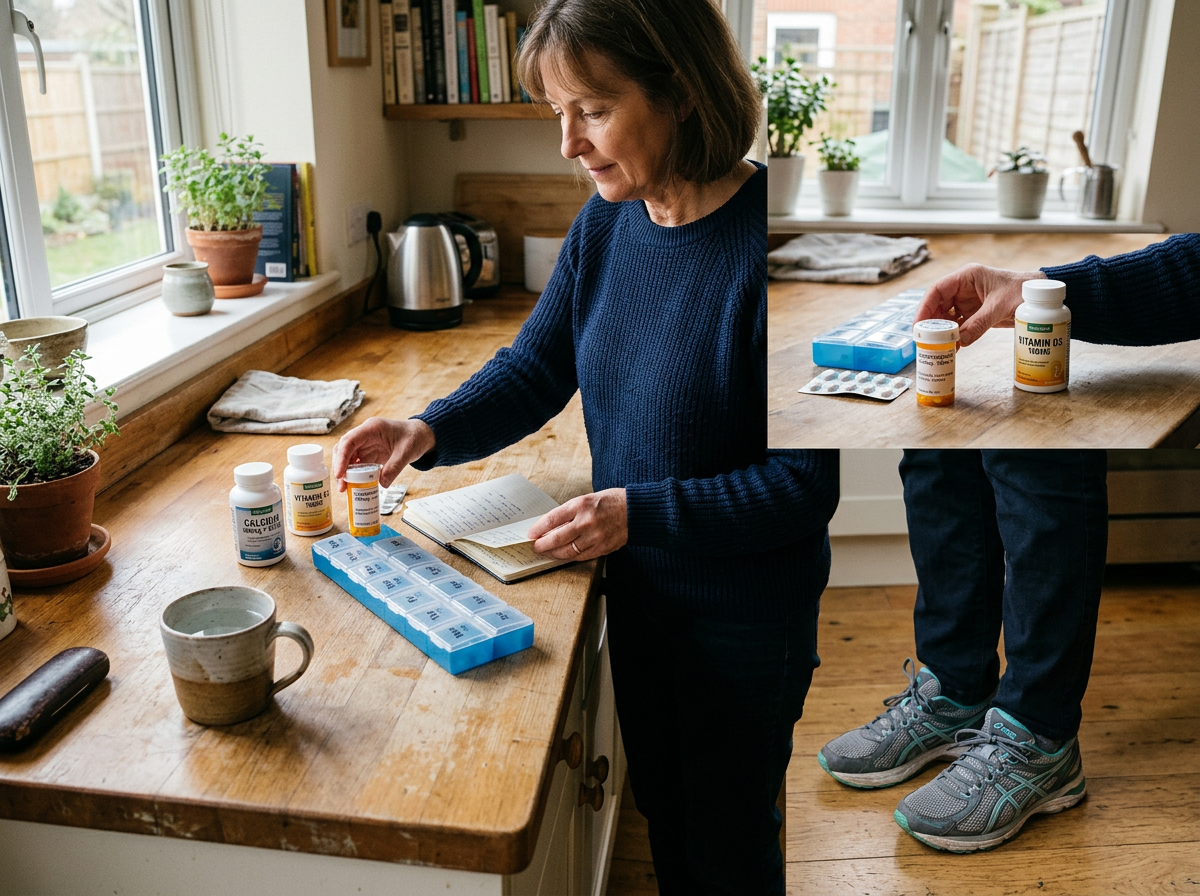
The next step is usually a routine review, not an abrupt medication decision
Bone-health follow-up often means checking TSH, reviewing fracture risk, and tightening day-to-day habits before blaming the prescription itself.
What Should You Do Next?
Use this checklist instead of guessing.
| Situation | What it more often means | Best next step |
|---|---|---|
| Normal TSH, stable dose, osteopenia on DEXA | Look beyond levothyroxine alone | Review full fracture risk, calcium/vitamin D, exercise, menopause, other meds |
| Low or suppressed TSH plus palpitations, tremor, insomnia, or weight loss | Possible over-replacement | Ask for a dose review and repeat thyroid labs |
| High fracture risk but no recent TSH check | Missing key information | Recheck thyroid status before blaming the medication |
| Thyroid cancer suppression therapy | Different risk-benefit balance | Review target TSH and bone protection plan with your specialist |
Practical next steps:
1. Check the lab trend, not just one number
One borderline result is less important than a pattern of low TSH over time.
2. Review your symptom pattern
Bone risk becomes more suspicious as a levothyroxine issue when it travels with classic over-treatment symptoms.
3. Review other bone-risk factors honestly
Menopause, steroids, smoking, inactivity, and low nutrient intake can matter just as much or more.
4. Do not lower or stop levothyroxine on your own
Undertreating hypothyroidism creates its own long-term problems. The goal is correction, not fear-based dose cutting.
5. Ask whether you need broader bone protection
Depending on age and risk, that may mean repeat DEXA timing, vitamin D review, calcium intake review, fall-risk reduction, or medication discussion beyond thyroid treatment.
What About Patients on Long-Term Therapy?
Long-term levothyroxine use can be very safe for bone when the dose remains appropriate.
Think of Marcus, age 58, who takes levothyroxine after thyroid surgery. He has yearly follow-up, keeps calcium supplements well separated from his morning dose, and gets his TSH rechecked when the dose changes. His long-term risk profile is very different from someone who has stayed mildly suppressed for years without monitoring.
That difference is the whole point. The safer long-term strategy is not avoiding thyroid hormone. It is staying out of the over-replaced zone.
For the broader version of that discussion, Long-Term Safety of Levothyroxine goes deeper.

Bone-density questions stay routine until pain or a fall changes the situation
A sudden fracture-style pain pattern belongs in urgent evaluation rather than in a slow outpatient dose discussion.
When Should You Get Help Right Away?
Bone loss itself is usually a chronic issue, not an emergency. The urgent problems are the consequences of either a fracture or a strong hyperthyroid pattern.
Get prompt medical help if you have:
- a fall followed by hip, back, or wrist pain
- sudden inability to bear weight
- chest pain
- fainting
- severe palpitations or shortness of breath
Those symptoms need attention for reasons bigger than the thyroid question alone.
Frequently Asked Questions
Can levothyroxine cause osteoporosis?
It can contribute to bone loss when the dose is too high for too long. Official labeling ties the risk to over-replacement, not to normal replacement therapy itself.
Who is most likely to have bone problems on levothyroxine?
Postmenopausal women, older adults, people with existing osteoporosis, and patients with chronic TSH suppression have the least margin for overtreatment.
Should I stop levothyroxine if my DEXA scan is low?
No. Do not stop it on your own. The better step is to review your thyroid labs, fracture risk, and the full list of other bone-risk factors with your clinician.
If my TSH is normal, is levothyroxine still the likely reason for bone loss?
Usually not the first explanation. Normal, stable thyroid replacement is much less concerning than a long period of low TSH or a separate bone-risk factor such as menopause, steroids, or low vitamin D.
Do I need a bone density scan just because I take levothyroxine?
Not automatically. Bone-density testing depends more on age, menopausal status, fracture risk, and clinical history than on the existence of levothyroxine therapy alone.
Key Takeaways
- Bone density concerns on levothyroxine usually point to chronic over-replacement, not to thyroid replacement itself.
- Current DailyMed guidance warns that too much thyroid hormone can increase bone resorption and decrease bone mineral density.
- Postmenopausal women, older adults, and people with existing fracture risk need closer monitoring.
- A low DEXA result does not automatically mean levothyroxine caused it. Menopause, steroids, smoking, inactivity, and low vitamin D often matter too.
- The safest move is not stopping the medication. It is checking the lab trend, the symptom pattern, and the full fracture-risk picture.
Bone density and levothyroxine are connected, but not in the simplistic way most patients fear. The important question is not whether you take thyroid hormone. It is whether your body has been exposed to too much thyroid hormone for too long. If you answer that question carefully, the next step usually becomes much clearer.
Sources
- DailyMed. Levothyroxine Sodium Tablets prescribing information, revised February 2026. https://dailymed.nlm.nih.gov/dailymed/getFile.cfm?setid=db9821db-3fe3-d1cf-e053-2a95a90a0252&type=pdf
- FDA. Levothyroxine Sodium Tablets prescribing information, revised November 2023. https://www.accessdata.fda.gov/drugsatfda_docs/label/2023/021116s027lbl.pdf
- American Thyroid Association. Does levothyroxine therapy during the treatment of subclinical hypothyroidism affect bone density? https://www.thyroid.org/patient-thyroid-information/ct-for-patients/november-2022/vol-15-issue-11-p-3-4/
- American Thyroid Association. Warning – Too Much Thyroid Hormone Increases Bone Fractures In The Elderly. https://www.thyroid.org/warning-too-much-thyroid-hormone-increases-bone-fractures-in-the-elderly/
- Turner MR, Camacho X, Fischer HD, et al. Levothyroxine dose and risk of fractures in older adults: nested case-control study. BMJ. 2011. https://pubmed.ncbi.nlm.nih.gov/21527461/