Many people start levothyroxine with one very specific hope: the scale will finally move in the right direction.
That hope is understandable. It is also one of the places where thyroid treatment gets oversold the most.
Here is the short answer: levothyroxine can help reverse some thyroid-related weight effects, but it is not a weight-loss drug and it does not reliably cause major fat loss. The American Thyroid Association says that treatment of hypothyroidism is not associated with clinically significant weight loss in most people. A real-world study of adults treated for primary hypothyroidism found that median weight change after TSH normalized was close to zero, and only about half of patients lost weight at all.
That does not mean levothyroxine is failing. It means the medication is doing a narrower job than many people expect. It replaces missing thyroid hormone. It does not override menopause, insulin resistance, poor sleep, low activity, calorie intake, or years of gradual weight change from other causes.
This guide explains what weight changes are realistic after starting levothyroxine, why some people lose a little, why some lose nothing, why some still gain weight, and when the scale points to a real dose problem.
The Quick Answer
If you want the honest version in one glance, it looks like this:
| Situation | What usually happens | What it means |
|---|---|---|
| Untreated hypothyroidism | Weight may go up gradually | Often a mix of fluid retention, lower activity, constipation, and some fat gain |
| Correctly dosed levothyroxine | Some people lose a small amount, many stay similar | The medication is restoring normal thyroid hormone levels, not creating a weight-loss state |
| Levothyroxine dose too high | Weight loss can happen | This is overtreatment, not healthy or intentional fat loss |
| Normal TSH but no weight loss | Very common | Weight issues may be driven by other factors besides thyroid hormone |
| Major weight change after being stable | Dose needs may change | Repeat TSH testing may be appropriate |
The key idea is simple: levothyroxine may remove one thyroid-related barrier, but it does not guarantee meaningful weight loss.
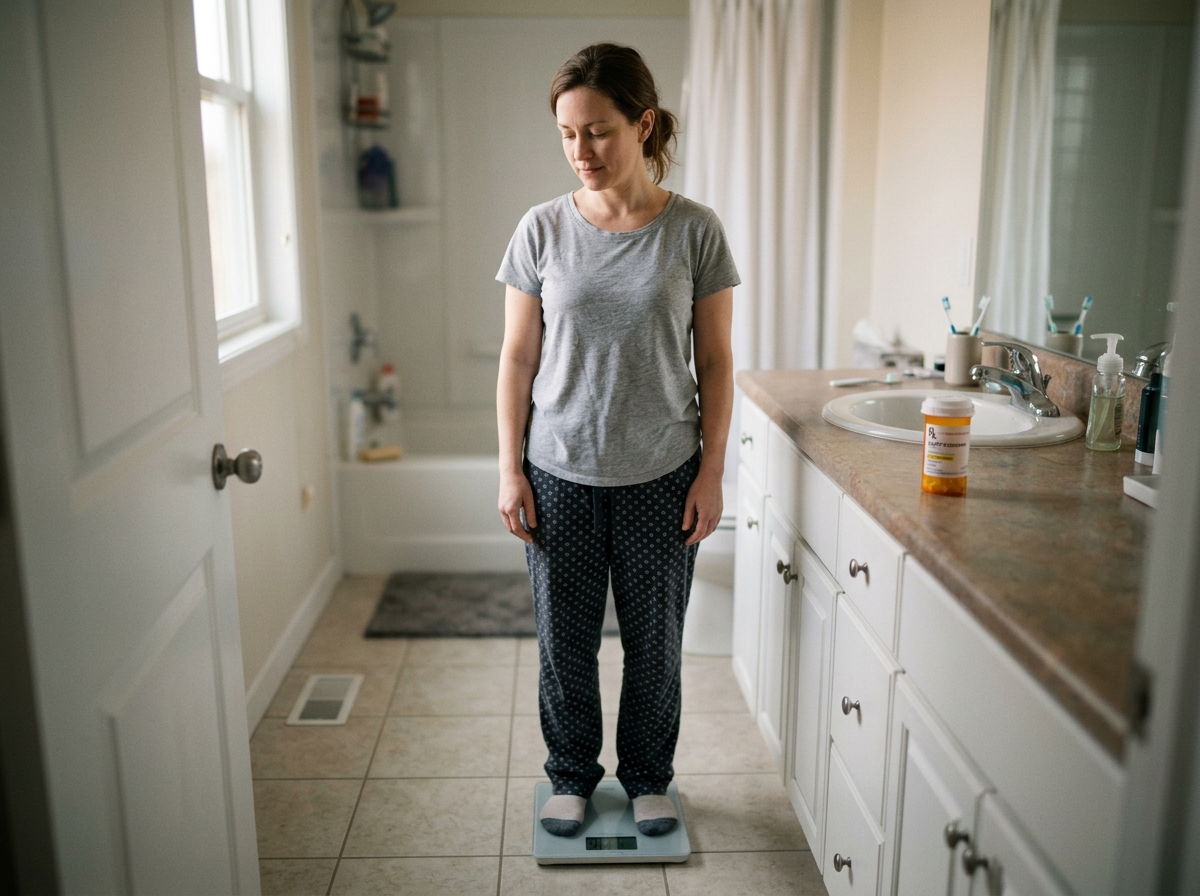
The scale often carries expectations that levothyroxine was never meant to meet
For most patients, thyroid treatment corrects a hormone problem. It does not automatically create dramatic fat loss.
Why Hypothyroidism Affects Weight in the First Place
People often assume thyroid-related weight gain is just “slower metabolism.” That is only part of the story.
Hypothyroidism can affect body weight through several overlapping mechanisms:
- lower resting energy use
- fatigue that reduces activity
- fluid retention
- constipation and bloating
- broader slowing of body processes
That matters because not all hypothyroid weight gain is the same kind of weight. Some of it is true fat gain over time. Some of it is retained fluid. Some of it is the indirect effect of feeling too tired to move the way you normally would.
This is one reason patients sometimes see a modest drop after starting treatment and then feel disappointed when the change stops. The early shift may reflect improved fluid balance more than dramatic fat loss.
The ATA’s patient material on thyroid and weight makes this point clearly: treatment can return body weight toward what it would have been without untreated hypothyroidism, but it does not usually produce large losses beyond that.
So the first expectation reset is this: thyroid treatment is correction, not metabolic acceleration.
What Levothyroxine Actually Does
Levothyroxine is synthetic T4, the same hormone your thyroid normally makes. When the dose is correct, the goal is to bring thyroid hormone effect back into a normal physiologic range.
That means levothyroxine:
- helps correct hormone deficiency
- moves metabolism back toward baseline
- may reduce some thyroid-related fluid retention
- may improve energy enough to support normal activity again
It does not mean levothyroxine:
- acts like a stimulant
- reliably burns off stored fat
- works as a stand-alone weight-loss strategy
- should be increased just to force the scale down
That last point is especially important. FDA labeling warns that thyroid hormones should not be used for obesity or weight loss in euthyroid patients. Excess doses can cause serious or even life-threatening toxicity, particularly when combined with other weight-loss agents.
So if weight falls because the dose is too high, that is not a success story. It is over-replacement.
What Studies Show After Treatment Starts
This is the section most articles skip or oversimplify.
One of the most useful studies on this question followed adults with primary hypothyroidism after treatment with levothyroxine. The headline result was not dramatic. Median weight change after TSH normalization was about -0.1 kg. Only around half of patients lost weight at all.
Among the people who did lose weight, the average loss was still modest. That tells patients two things:
- Some weight loss can happen.
- Large, automatic weight loss is not the usual outcome.
Why is the result so underwhelming compared with popular expectations?
Because hypothyroidism is often only one contributor in a much bigger picture. Even when thyroid hormone deficiency is corrected, the body may still be dealing with:
- low muscle mass
- poor sleep
- menopause or perimenopause
- insulin resistance
- antidepressants or other medications
- reduced activity habits built during the hypothyroid period
In other words, levothyroxine can fix the thyroid part without fixing everything else attached to the weight story.
Why Some People Lose a Little Weight Early
The small early drop some patients notice is real. It is just often misunderstood.
Common reasons for modest early loss include:
- reduced fluid retention
- less bloating and constipation
- gradual return of energy and movement
- correction of severe untreated hypothyroidism
This is why the most accurate expectation is often:
- a little weight loss is possible
- large losses are uncommon
- the change may plateau quickly
Patients who had more overt hypothyroidism, more edema, or more pronounced fluid retention may notice a slightly bigger early difference than patients whose hypothyroidism was mild.
That is not evidence that levothyroxine is a better weight-loss tool for some people. It usually just means the thyroid-related component of their weight gain was larger.

Body changes after thyroid treatment are often subtler than patients expect
A small early shift may happen, but many patients discover that the larger weight story involves much more than thyroid hormone alone.
Why Some People Gain Weight Even After Starting Levothyroxine
This is the scenario that frustrates patients most.
You start treatment, try to be patient, maybe even feel somewhat better, and the scale still goes up. Or at least it does not go down.
Common reasons include:
The dose is still too low
If TSH remains above target or symptoms strongly suggest persistent hypothyroidism, then the thyroid problem may still be under-corrected.
The weight issue was never mainly thyroid-driven
Thyroid disease is common, but so are weight changes from aging, stress, menopause, sleep apnea, depression, low activity, and insulin resistance. Finding hypothyroidism does not prove it was the main reason for the weight problem.
Activity did not rebound the way you expected
Some patients feel a little better but do not return to their prior activity level. Fatigue can improve faster than strength, conditioning, or daily habits.
Appetite and routines changed
If hypothyroidism improved your fatigue or mood, your appetite and social eating patterns may also have changed. The body is complicated. Not every “I feel better” change leads to fat loss.
Another medication or life stage is now driving the picture
Birth control changes, antidepressants, steroids, menopause transition, and pregnancy-related shifts can all matter more than the thyroid once TSH is corrected.
The practical point is that weight gain on levothyroxine does not automatically mean the medication itself is causing fat gain.
Can Levothyroxine Cause Weight Loss?
Yes, but often not in the way people mean.
If the dose is too high, levothyroxine can cause symptoms of excess thyroid hormone, including:
- unintended weight loss
- diarrhea
- heat intolerance
- palpitations
- sweating
- tremor
- anxiety
- insomnia
That pattern is not the same thing as healthy fat loss.
It is overtreatment.
If someone says, “I lost weight after the dose increase, so maybe I should stay here,” the right question is not just what the scale did. The right question is whether the person also developed:
- a lower-than-intended TSH
- a racing heartbeat
- shakiness
- worsening sleep
- cardiac strain
That is why levothyroxine should never be adjusted as a weight-loss tactic. If weight loss is coming from an over-replaced state, the price can be palpitations, arrhythmia risk, and long-term bone loss.
Can Levothyroxine Cause Weight Gain?
Usually not directly.
The better question is often whether one of these is happening:
- hypothyroidism is still undertreated
- the weight issue has a different cause
- early water-weight changes were misread as true fat loss
- other medications or conditions are now the bigger driver
Patients sometimes say, “I started levothyroxine and gained ten pounds, so the drug must do that.” In reality, the timeline may be more misleading than it looks. The weight gain may have been underway before treatment, or it may reflect persistent under-replacement, menopause, stress eating, inactivity, or another medical issue.
So the most accurate statement is: levothyroxine is usually not a direct cause of meaningful weight gain when dosed appropriately.
What If Your TSH Is Normal but the Weight Will Not Budge?
This is one of the most common real-life outcomes, and it deserves a real answer.
A normal TSH means thyroid replacement is likely in the intended range. It does not mean every symptom or every weight problem must resolve.
When weight remains stubborn despite normal thyroid labs, the next issues to review often include:
- sleep quality and sleep apnea risk
- calorie intake and protein intake
- menopause or low estrogen states
- insulin resistance or diabetes risk
- strength loss and low muscle mass
- depression or chronic stress
- medications associated with weight gain
This is also where many patients get trapped in the idea that “if I just push the levothyroxine higher, maybe the weight will finally move.” That approach is unsafe and usually disappointing.
The better next step is broader troubleshooting, not more thyroid hormone.
If fatigue is still part of the picture, Fatigue on Levothyroxine: Why It Happens belongs in the same conversation. If the real question is whether treatment is even necessary in a borderline case, Subclinical Hypothyroidism: Should You Start Levothyroxine? is the more relevant companion article.

More energy can come back before the scale changes much
Improved activity tolerance is real progress even when body weight moves slowly or barely changes at all.
When Weight Changes Mean the Dose May Need Review
The relationship between thyroid hormone and body weight runs both ways.
Body size influences levothyroxine dosing, especially in full-replacement situations. That means a meaningful weight change can alter how much levothyroxine you need.
Situations where repeat labs are reasonable include:
- major weight loss
- major weight gain
- bariatric surgery
- prolonged calorie restriction with body-composition change
- pregnancy or postpartum transition
This does not mean every 5-pound fluctuation requires a new prescription. It means that large or sustained shifts can change dose needs enough to justify TSH re-checking.
The same is true if a patient begins a weight-management treatment that changes absorption, eating patterns, or body mass over time.
So the weight article is not just about “does levothyroxine change my weight?” It is also about “can my changing weight alter my thyroid dose needs?”
What To Discuss With Your Clinician
If weight remains the main problem, these are the most useful questions:
- Is my current TSH actually at goal for my situation?
- Do my symptoms fit under-replacement, over-replacement, or neither?
- Could another condition be contributing more than thyroid disease now?
- Have my weight changes been large enough to affect my dose?
- Do I need a broader plan beyond thyroid medication alone?
The strongest visit is usually not the one where you ask for “more thyroid medicine.” It is the one where you ask for a more complete explanation of why the weight pattern still looks the way it does.

When weight stays stuck, the next conversation is usually bigger than thyroid dose alone
Normalizing TSH is often only one piece of a broader weight, sleep, activity, and metabolic picture.
What Patients Commonly Get Wrong About This Topic
Mistake 1: Assuming levothyroxine is supposed to cause weight loss
It is supposed to replace missing thyroid hormone. Weight loss is not the primary therapeutic endpoint.
Mistake 2: Thinking no weight loss means the medication failed
TSH can normalize and the medication can still be doing exactly what it is supposed to do.
Mistake 3: Treating overtreatment as a useful shortcut
Weight loss from an excessive dose is not a safe strategy.
Mistake 4: Blaming all weight gain on the medication
Often the bigger drivers are persistent hypothyroidism, lifestyle changes, aging, menopause, or other medications.
Mistake 5: Forgetting that weight change can alter dose needs too
The scale may not just reflect your thyroid status. It can also affect your future dose.
Frequently Asked Questions
Will levothyroxine help me lose weight?
It may help reverse some thyroid-related fluid retention and low-metabolism effects, but it is not a weight-loss medication and most patients do not lose large amounts of weight from levothyroxine alone.
Why did I not lose weight after starting levothyroxine?
Because a normal thyroid level does not erase every other cause of weight difficulty. Many people have weight drivers beyond hypothyroidism.
Can too much levothyroxine make you lose weight?
Yes. But that usually reflects overtreatment, which can also cause palpitations, tremor, anxiety, insomnia, and long-term bone or heart risk.
Can levothyroxine make you gain weight?
Usually not directly. If weight is rising, the better explanations are often undertreatment, non-thyroid causes, or unrealistic expectations about how much thyroid correction should change the scale.
If my TSH is normal, why am I still struggling with weight?
Because thyroid replacement is only one part of weight regulation. Sleep, menopause, insulin resistance, activity, calorie intake, muscle mass, and other medications still matter.
Should my thyroid dose change after major weight loss?
Possibly. Major weight change can alter levothyroxine needs, so repeat thyroid testing may be appropriate.
Key Takeaways
- Levothyroxine is not a weight-loss drug.
- Most people do not experience large weight loss after starting treatment, even when hypothyroidism improves.
- Early changes may reflect water-weight shifts more than major fat loss.
- Weight loss from too much levothyroxine is overtreatment, not success.
- If weight remains stubborn after TSH normalizes, the next step is broader troubleshooting, not automatic dose escalation.
- Major weight changes can also alter your future dose needs.
Sources
- American Thyroid Association. Does Treatment of Hypothyroidism Lead to Weight Loss? https://www.thyroid.org/does-treatment-of-hypothyroidism-lead-to-weight-loss/
- American Thyroid Association. Thyroid and Weight. https://www.thyroid.org/wp-content/uploads/patients/brochures/Thyroid_and_Weight.pdf
- Jonklaas J, et al. Changes in body weight after treatment of primary hypothyroidism with levothyroxine. https://pubmed.ncbi.nlm.nih.gov/24936556/
- FDA. Levothyroxine Sodium Tablets prescribing information. https://www.accessdata.fda.gov/drugsatfda_docs/label/2023/021116s027lbl.pdf
- Coupaye M, et al. Change in levothyroxine requirements after bariatric surgery in patients with hypothyroidism. https://pubmed.ncbi.nlm.nih.gov/35489047/