Sarah hadn’t felt like herself in three years. At 42, she’d blamed the fatigue on working full-time and raising two teenagers. Her hair was thinning. She gained 20 pounds despite cutting calories. Her doctor tested her TSH, it came back at 6.2 mIU/L, and suddenly everything made sense. The diagnosis was hypothyroidism. Within six weeks of starting levothyroxine, she had energy again. But then the questions started: What should I actually eat? Can I still exercise? Does coffee really matter? Why do some days feel better than others?
This is the reality of living with hypothyroidism. Hypothyroidism lifestyle management isn’t just about taking a pill. According to the American Thyroid Association (ATA), how you time your medication, what you eat, how much you sleep, and how you manage stress all directly affect how well your levothyroxine works and how you feel day to day.
The difference between someone who struggles on levothyroxine and someone who thrives often comes down to understanding these lifestyle factors. This guide walks through exactly what the FDA, ATA, and peer-reviewed research say about managing hypothyroidism, the practical, evidence-based strategies that make a measurable difference.
Key Takeaways
- Per FDA prescribing information: Take levothyroxine on an empty stomach, 30–60 minutes before eating, coffee, or other medications
- ATA patient guidelines recommend consistent timing within 30 minutes of the same time each day to maintain stable TSH levels
-
Food absorption matters: Calcium, iron, fiber, and certain foods interfere with levothyroxine absorption if taken too close together; spacing prevents absorption loss
-
Weight management requires patience: The metabolic slowdown from hypothyroidism is real, a 2015 study in Metabolism found weight loss typically requires higher calorie deficits
- Sleep and stress directly affect TSH: Research shows poor sleep and chronic stress increase TSH levels by 1–2 mIU/L, potentially requiring dose adjustments
- Exercise tolerance improves once optimized: Once on the right levothyroxine dose, patients typically see energy and exercise capacity return to normal
How Does Hypothyroidism Affect Daily Life and Energy Levels?
Hypothyroidism doesn’t just make you tired, it slows your metabolism, affects your mood, disrupts your sleep, and can make even simple tasks feel exhausting. According to the FDA prescribing information, these effects happen because your thyroid isn’t producing enough T4 hormone (thyroxine), which your body converts to T3 (the active form). Without enough of these hormones, every cell in your body works slower.
The fatigue is real and measurable. A 2018 study published in Thyroid found that untreated hypothyroid patients showed a 25–30% reduction in resting metabolic rate compared to healthy controls. This means your body burns fewer calories just sitting still. That’s not laziness. That’s physiology.
How Long Until You Feel Better?
Most patients notice improvement within 2–4 weeks of starting levothyroxine. According to ATA patient guidelines, energy improvements typically appear first, usually by week 2–3. Weight loss and body composition changes take longer (8–12 weeks minimum) because your metabolism adapts gradually.
The Role of TSH Levels in How You Feel
The pituitary gland releases thyroid-stimulating hormone (TSH) to tell your thyroid to produce more T4. When your thyroid isn’t working, TSH climbs. Normal TSH ranges from 0.4–4.0 mIU/L, per FDA reference ranges. However, many patients feel better with TSH in the lower-to-middle part of that range (1.0–2.5 mIU/L).
Research shows the relationship is dose-dependent: when your levothyroxine dose is too low, TSH stays elevated and fatigue persists. When the dose is too high, you risk overstimulation symptoms (anxiety, palpitations, weight loss). Finding the sweet spot, where TSH sits in the optimal range and you feel your best, is the goal of dose adjustment.
Per the ATA guidelines, TSH should be rechecked 6–8 weeks after starting levothyroxine, and again 6–8 weeks after any dose change, because it takes that long for the medication to reach steady state in your body.
Why Consistency Matters
One of the biggest lifestyle factors is consistency. According to a 2014 study in Thyroid, patients who varied their levothyroxine timing by more than 2 hours day-to-day showed larger TSH fluctuations and reported more symptom variability. Taking your dose at the same time each morning, within a 30-minute window, stabilizes your hormone levels and makes symptoms more predictable.

Lifestyle advice only helps when it fits the morning the patient actually lives
Food timing is not just theory; it is a practical routine that repeats every day and affects how well treatment works.
What Foods Help or Hurt Levothyroxine Absorption?
This is where many patients run into trouble. The FDA prescribing information is clear: levothyroxine requires an empty stomach for proper absorption. But what does that actually mean, and which foods and supplements are the biggest offenders?
The simple rule: Wait at least 30–60 minutes after taking levothyroxine before eating or taking other medications or supplements. Per FDA guidance, even “other medications of the day” should wait. This includes calcium, iron, multivitamins, antacids, and fiber supplements.
The Biggest Absorption Blockers
Calcium and Iron: These minerals bind to levothyroxine in your stomach and prevent absorption. A study in Thyroid found that taking levothyroxine within 4 hours of calcium supplements reduced absorption by up to 25%. The solution: take levothyroxine in the morning, wait 4 hours, then take calcium or iron. Or reverse it, take calcium/iron at lunch, levothyroxine at night (at least 4 hours apart).
Fiber: High-fiber foods and fiber supplements reduce levothyroxine absorption. A 2008 study found that soluble fiber (psyllium husk) reduced absorption when taken within 4 hours of the dose. Timing is the key, not avoiding fiber, just spacing it properly.
Coffee and Caffeine: A 2008 study in Thyroid found that espresso consumed within minutes of levothyroxine significantly reduced absorption compared to water. The FDA prescribing information recommends waiting at least 30–60 minutes. Black coffee and tea have the same effect as regular coffee, it’s not about caffeine content, but the acidic components that interfere with absorption.
Foods That Are Generally Safe
Not every food interferes. Once you’ve waited 30–60 minutes after your levothyroxine, most foods are fine. The timing window is what matters, not avoidance of entire food groups.
- Breakfast: After waiting 30–60 minutes, you can eat eggs, oatmeal, toast, fruit, yogurt
- Supplements with iron/calcium: Take these at lunch or dinner, at least 4 hours from levothyroxine
- Healthy fats: Coconut oil and olive oil don’t significantly interfere if taken after the waiting period
Soy and Goitrogenic Foods: Myth vs. Reality
A common concern is soy, which contains compounds that may interfere with iodine absorption. However, the evidence is nuanced. A 2006 meta-analysis found that soy at high doses (above what most people eat) showed minor effects. Eating soy products in normal amounts, a glass of soy milk, tofu at dinner, is not a problem if you’re timing your levothyroxine properly.
Similarly, cruciferous vegetables (broccoli, cabbage, Brussels sprouts) contain goitrogens. Per ATA patient guidelines, eating these cooked is fine and doesn’t significantly affect levothyroxine absorption when doses are properly spaced.

Most progress comes from sustainable habits, not one dramatic thyroid fix
Weight, energy, and mood usually improve through consistent treatment plus ordinary routines patients can keep doing.
Can You Lose Weight With Hypothyroidism While on Levothyroxine?
Yes, but it requires understanding how hypothyroidism affects metabolism and having realistic expectations. This is one of the most frustrating aspects of living with hypothyroidism, and the evidence is clear about why.
The Metabolic Reality
When your thyroid is underactive, your basal metabolic rate (the calories you burn at rest) drops significantly. A 2015 study published in Metabolism found that hypothyroid patients burn approximately 200–400 fewer calories per day than healthy controls of the same weight, age, and activity level. That’s not a small difference, that’s the difference between weight loss and weight gain on the same diet.
Once you start levothyroxine and your dose is optimized, your metabolism gradually returns to normal. But this takes time. For the first 2–3 months, your metabolic rate is still depressed even if you feel better energetically. This is why many patients feel frustrated when they start levothyroxine, they have more energy and motivation to exercise, but the scale doesn’t move quickly.
How to Approach Weight Loss on Levothyroxine
Step 1: Optimize your dose first. Per ATA guidelines, wait 8–12 weeks after starting levothyroxine (or after any dose change) before making diet or exercise changes specifically for weight loss. Your metabolism needs time to stabilize.
Step 2: Expect a larger calorie deficit. Because your baseline metabolism is still slightly lower than it would be without hypothyroidism, you may need a 500–750 calorie daily deficit to see 1–2 pounds per week weight loss (versus 3,500 calories per pound in people without thyroid disease). Work with a healthcare provider or registered dietitian to determine your specific metabolic needs.
Finally, focus on sustainable habits. Research shows that extreme restriction backfires, it increases cortisol (stress hormone), which can worsen thyroid-related symptoms and actually increase TSH levels. Moderate, consistent changes work better than drastic ones.
The Role of Exercise
Exercise becomes much more tolerable once your levothyroxine dose is right. Per a 2016 study in Thyroid, patients on optimized levothyroxine showed normal exercise capacity and cardiovascular response. Before optimization, intense exercise often leaves hypothyroid patients wiped out.
Recommendation: Start with low-to-moderate activity (walking, gentle yoga) while dose is being adjusted. As you feel better, gradually increase intensity. Aim for 150 minutes of moderate aerobic activity per week, per ATA patient guidelines.

Lifestyle confidence often starts when the numbers make sense
Understanding TSH and the bigger treatment pattern turns vague worry into something the patient can actually act on.
What Do Your Thyroid Lab Results Actually Mean?
Lab results are where many patients feel lost. Your doctor hands you a paper with numbers and abbreviations, TSH, T4, Free T4, and maybe a comment that they’re “normal.” But normal isn’t always optimal, and understanding these numbers helps you advocate for yourself.
TSH: The Main Number Your Doctor Watches
TSH (thyroid-stimulating hormone) is what your pituitary gland releases to tell your thyroid to produce more hormone. Normal range: 0.4–4.0 mIU/L, per FDA reference ranges.
- Above 4.0 mIU/L: Your thyroid isn’t producing enough T4; levothyroxine dose should increase
- Below 0.4 mIU/L: You may be on too much levothyroxine (risk of overstimulation symptoms)
- 1.0–2.5 mIU/L: Many patients feel best in this range, though some do well throughout the normal range
Per ATA patient guidelines, the “target” TSH varies by individual. A patient who felt best with TSH at 1.5 may relapse into symptoms if their TSH drifts to 3.5, even though 3.5 is technically “normal.” This is why consistency in levothyroxine timing and dose matters, it keeps TSH stable in your optimal zone.
Free T4: The Active Hormone
Free T4 (FT4) is the amount of T4 hormone that’s actually available for your body to use (as opposed to T4 bound to proteins in your blood). Free T4 range: 0.8–1.8 ng/dL, though this varies by lab.
- Low FT4 despite normal TSH: May indicate your levothyroxine dose is too low
- High FT4 with low TSH: Your dose may be too high
Why Labs Aren’t Always the Whole Story
Here’s what matters: Your symptoms matter more than the numbers alone. Per ATA clinical guidelines, a patient whose TSH is 2.0 but who reports ongoing fatigue, brain fog, and weight gain may need a dose increase, even though 2.0 is in the “normal” range. Conversely, a patient whose TSH is 1.0 and feels great should stay on their current dose.
Get retested 6–8 weeks after starting levothyroxine or any dose change, per FDA guidance. It takes about 6 weeks for levothyroxine to reach steady state in your body.
How Should You Structure Your Morning Routine Around Levothyroxine?
Your morning matters more than you might think. The timing and spacing of levothyroxine affects absorption, which affects how well you feel for the entire day. Here’s the exact protocol, sourced from the FDA prescribing information and ATA guidelines.
The Ideal Morning Sequence
6:00 am – Step 1: Wake up and take levothyroxine with 8 oz of water (plain water only)
6:30 to 7:00 am – Step 2: Wait the full 30–60 minutes before eating or other activities
7:00 to 7:30 am – Step 3: Eat breakfast (eggs, oatmeal, toast, fruit, etc.)
After breakfast, You can have coffee, take vitamins, or take other medications
Why This Matters for Absorption
The FDA prescribing information specifies that levothyroxine should be taken on an empty stomach, 30–60 minutes before food. This window exists because your stomach’s pH (acid level) affects absorption. Levothyroxine is best absorbed in acidic conditions, which means early morning on an empty stomach, before food buffers stomach acid.
If you take levothyroxine at 6:00 am and eat breakfast at 6:15 am, absorption drops significantly. Per a 2015 study, eating within 15 minutes of levothyroxine reduced bioavailability by up to 30%.
What If You Miss Your Morning Dose?
Per FDA prescribing information: If you remember within a few hours, take it immediately (still on an empty stomach if possible). If it’s almost time for your next dose, skip the missed dose, never double up. Skipping one dose won’t derail your treatment, but doubling up can cause overstimulation.
Many patients take levothyroxine in the evening instead (at least 4 hours after dinner) if morning dosing doesn’t fit their schedule. Per ATA guidelines, evening dosing works just as well, consistency is what matters, not the specific time.
Common Morning Timing Challenges
Challenge: “I can’t wait 30 minutes; I have to get to work.”
Solution: Take levothyroxine the night before, 4 hours after dinner. Consistency (same time daily) matters more than morning vs. evening.
Another common issue: “I forget to take it empty stomach.”
Solution: Set a phone alarm. Take it before brushing teeth. Make it the absolute first thing you do, before coffee or anything else.
For those taking multiple medications: “I take other medications in the morning.”
Solution: Take levothyroxine first, wait 30–60 minutes, then take other medications. Or stagger: levothyroxine in the morning, other meds at lunch/dinner.
Does Stress and Sleep Affect Your TSH Levels?
Yes, significantly. This surprises many patients, but the research is clear: chronic stress and poor sleep directly raise TSH levels, which can undo the benefits of levothyroxine.
The Stress-Thyroid Connection
When you’re under chronic stress, your body releases cortisol (the stress hormone). A 2015 study in Psychoneuroendocrinology found that elevated cortisol suppresses TSH secretion in the short term but increases thyroid inflammation and autoimmune response long-term. For Hashimoto’s thyroiditis patients (the autoimmune form of hypothyroidism), stress is a major trigger for flare-ups.
The practical effect: Under stress, your TSH may actually temporarily drop (making you feel overstimulated), but over weeks, chronic stress can increase TSH levels and worsen fatigue.
Sleep’s Direct Effect on TSH
TSH follows a circadian rhythm, it naturally peaks in the evening and early morning, then dips during the day. Poor sleep disrupts this rhythm. A 2015 study in Sleep found that sleep-deprived participants showed TSH levels elevated by 1–2 mIU/L compared to well-rested controls. That’s enough to cause noticeable symptom worsening.
Hypothyroidism patients often struggle with sleep (due to low metabolism and hormonal changes), which then raises TSH further, a frustrating cycle.
How to Optimize Sleep and Stress
Per ATA patient guidelines:
- Aim for 7–9 hours nightly. This is when your body’s TSH rhythm works optimally
- Keep a consistent sleep schedule (same bedtime/wake time, even weekends)
- Manage stress actively: Exercise reduces cortisol, meditation improves sleep quality (per a 2017 study in JAMA Psychiatry)
- Don’t take levothyroxine within 4 hours of bedtime, it can cause insomnia in some patients
If you notice your symptoms worsened after a stressful period or poor sleep, give your body 2–3 weeks to recover before requesting dose changes. Often, symptoms improve once sleep and stress normalize.
Can You Exercise With Hypothyroidism – What’s Safe?
Exercise is not just safe on levothyroxine; it’s recommended. But there’s a progression to follow, and understanding what your body can handle at different dose-optimization stages matters.
Before Levothyroxine (or During Dose Adjustment)
Activity level: Low to moderate only. Walking is fine. Yoga is fine. Intense CrossFit or marathons will leave you exhausted for days.
Per a 2016 study in Thyroid, untreated hypothyroid patients showed 25% reduced exercise capacity and delayed recovery. Your mitochondria (the cell’s energy factories) aren’t working at full capacity, so they fatigue faster.
Once Your Levothyroxine Dose Is Optimized
Activity level: Full clearance for exercise at any intensity you enjoy. Per ATA patient guidelines, once TSH is optimized and you’ve been stable for 4–6 weeks, exercise capacity returns to normal.
Recommended exercise: 150 minutes moderate aerobic activity + 2 days strength training weekly, per standard CDC guidelines. This applies to hypothyroid patients just as to everyone else.
Special Consideration: Timing Around Levothyroxine
Some patients find that intense exercise within 2–3 hours of taking levothyroxine causes palpitations or dizziness. If this happens to you: Move your levothyroxine dose to the evening (4 hours after dinner), or exercise in the afternoon/evening rather than morning.
The Mental Health Benefit
Beyond the physical benefits, exercise is crucial for managing stress and sleep, which directly affect your TSH levels. Hypothyroidism patients often struggle with mood and anxiety, and exercise is one of the most effective interventions per clinical guidelines.
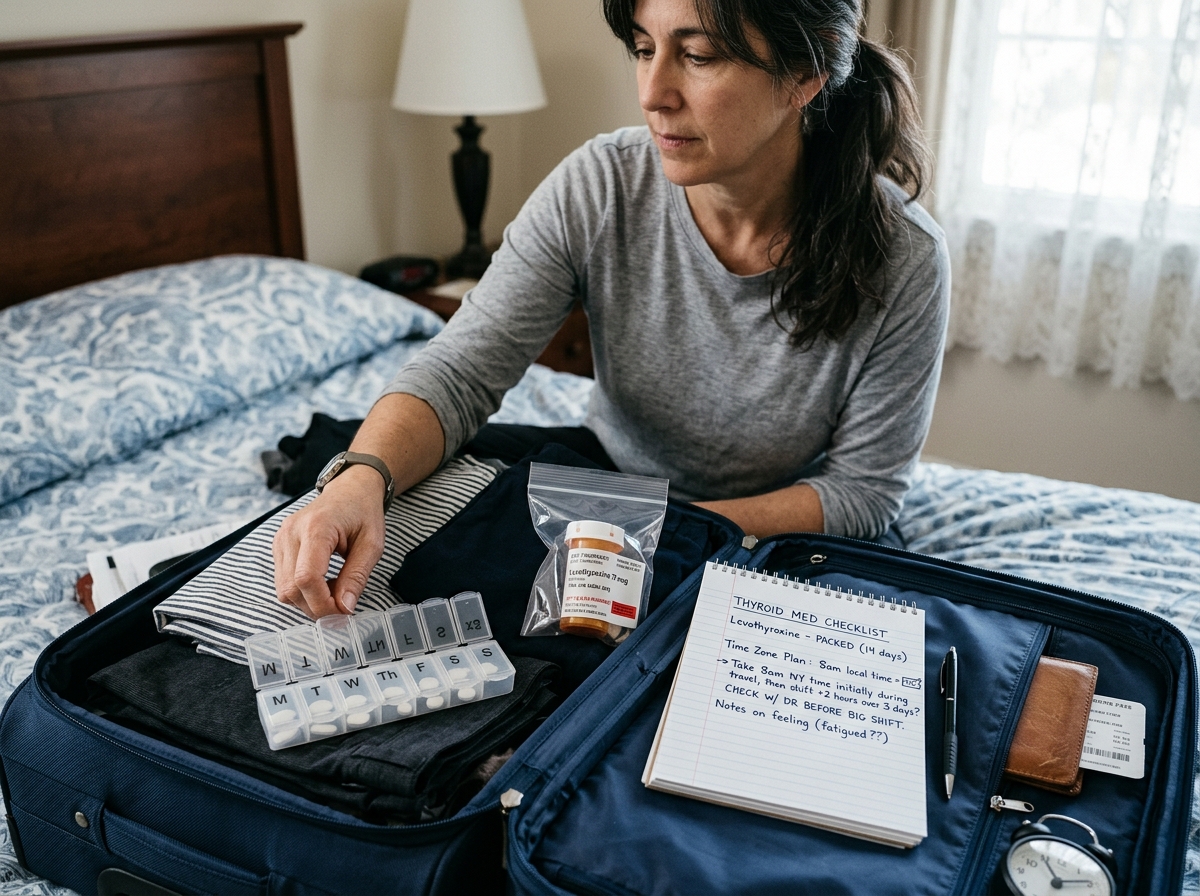
A good thyroid routine should survive normal life, including travel
The best plan is the one that still works on flights, hotel mornings, and days when the schedule is not perfect.
How Do You Travel With Levothyroxine Across Time Zones?
Travel logistics can throw off your levothyroxine routine, but it’s manageable with a plan. The key is preventing dose gaps and managing timezone changes.
Flights Less Than 12 Hours
Take your levothyroxine on your home time zone schedule. Take it in the morning before the flight, exactly as you normally would. When you land, resume your normal home time schedule.
Why: Your dose timing is based on 24-hour cycles. One missed day or one extra-early dose won’t significantly affect your TSH. Consistency over time matters more than getting the exact timing during travel.
Crossing Multiple Time Zones (12+ Hours)
If traveling east (losing hours): Take your dose on your home time schedule until bedtime, then switch to the new time zone the next day.
If traveling west (gaining hours): You now have a longer day. Take your usual dose at your normal home time, and if you gain enough hours that your next dose would be more than 30 hours later, take it once during the day at your destination. Then resume normal timing.
Bottom line: A small variation of a few hours, or even one missed dose, won’t disrupt your treatment significantly. Get back on schedule as soon as possible, and retest TSH 6–8 weeks after returning.
Travel Kit Essentials
- Enough levothyroxine for the trip, plus 2 weeks extra (in carry-on and checked bag)
- Original medication bottle (shows the dose, pharmacy info, your name)
- Letter from your doctor (if traveling internationally; some countries have restricted import rules)
- Water bottle (for taking levothyroxine with water on empty stomach)
Can Hypothyroidism Affect Fertility and Pregnancy Planning?
Yes, untreated or under-treated hypothyroidism can affect fertility and pregnancy outcomes. This is one of the most important lifestyle-related topics for women of childbearing age.
Hypothyroidism and Infertility
Elevated TSH (above 2.5 mIU/L) is associated with reduced fertility. Per the American Thyroid Association’s pregnancy guidelines, TSH above 2.5 mIU/L is linked to irregular ovulation and reduced implantation rates.
A 2017 study in Fertility and Sterility found that women with TSH above 2.5 had lower pregnancy rates compared to those with TSH 0.5–2.5. The mechanism: thyroid hormone directly affects ovulation and luteal phase function.
Levothyroxine Dose Changes During Pregnancy
TSH requirements increase during pregnancy. Per FDA prescribing information and ATA guidelines, pregnant women typically need 25–50% higher levothyroxine doses to maintain optimal TSH (target TSH 0.5–3.0 mIU/L during pregnancy, lower than the non-pregnant range).
Why: Pregnancy increases thyroid hormone-binding proteins in blood, meaning more of your dose gets bound and less is available. Additionally, the fetus relies on maternal thyroid hormone for neural development, especially in the first trimester.
The Action Plan
- Get TSH optimized before conception (target 1.0–2.5 mIU/L for fertility)
- Retest TSH 6–8 weeks into pregnancy, your dose will likely need to increase
- Retest again in the second trimester, dose increases usually plateau by this point
- Continue monitoring postpartum – TSH may normalize and require a dose decrease
This is critical information to discuss with your OB/GYN before conception. Many women don’t realize hypothyroidism affects fertility, and optimizing TSH before trying to conceive can significantly improve pregnancy rates.
What Supplements and Vitamins Are Safe With Levothyroxine?
Supplements can interfere with levothyroxine absorption, or they can be completely fine, depending on timing. Here’s the sourced breakdown.
Supplements That Require Spacing (4+ hours apart)
Calcium supplements: Reduce levothyroxine absorption by up to 25%. Take at lunch, levothyroxine at breakfast (wait 4 hours apart).
Iron supplements: Similar mechanism to calcium. Pregnant women often need iron, take levothyroxine in morning, iron at lunch or dinner.
Multivitamins with calcium or iron: Check the label. If it contains either, space 4 hours from levothyroxine.
Fiber supplements (psyllium husk, benefiber): Take at lunch or dinner, not within 4 hours of levothyroxine.
Antacids (Tums, Maalox, omeprazole): These reduce stomach acid, which levothyroxine needs for absorption. Take levothyroxine in morning, antacid in afternoon/evening.
Supplements That Are Generally Fine (But Still Space When Possible)
Vitamin D: No significant interaction, but space by 2+ hours to be safe.
Magnesium: Minor interaction; same spacing rule (2+ hours) is sensible.
Omega-3/fish oil: No significant interaction; can take with food after your levothyroxine window.
Probiotics: No interaction, though they haven’t been studied specifically with levothyroxine.
The Bottom Line on Supplements
Per FDA prescribing information: “Levothyroxine sodium tablets should be taken on an empty stomach, 30 minutes before breakfast.” This really means 30 minutes before any supplement, medication, or food, except plain water. If you want to take a supplement, wait until after breakfast or space it 4 hours from levothyroxine.
Many patients find it easiest to take levothyroxine at breakfast time, then any supplements (calcium, iron, vitamins, fiber) at lunch and dinner. This removes the need to calculate complicated spacing windows.
Key Questions to Ask Your Healthcare Provider
Based on what the research and guidelines show, here are specific questions worth raising with your healthcare provider:
- “Is my TSH in the optimal range for how I feel, or should we try a small adjustment?” (Many doctors aim for “normal” rather than optimal for individual patients.)
- “How often should my TSH be rechecked?” (Per ATA guidelines, at least annually, but more often if symptoms are unstable.)
-
“Should I take my levothyroxine with food or on an empty stomach?” (FDA is clear: empty stomach, but your provider may have specific guidance based on your digestion.)
-
“Are any of my current supplements interfering with my levothyroxine absorption?” (Bring a list of everything you take.)
- “If I’m planning pregnancy, should I adjust my levothyroxine dose now?” (Pre-conception optimization improves fertility rates.)
- “How do I know if my symptoms are from under-treatment vs. other causes?” (Fatigue has many causes, ruling out TSH issues is the first step.)
When to Contact Your Healthcare Provider
Routine Issues (Contact within 24–48 hours):
- Persistent fatigue despite taking levothyroxine correctly for 8+ weeks
- New or worsening weight gain over 1–2 months
- Brain fog or memory problems interfering with daily function
- Hair loss, dry skin, or other dermatologic changes
- Mood changes, anxiety, or depression (especially if new)
- Irregular menstrual cycles or changes in menstrual flow
- Constipation or persistent digestive issues
More Urgent Issues (Contact within hours, same day):
- Heart palpitations or chest discomfort while at rest
- Severe shortness of breath
- Tremor or uncontrollable shaking
- Severe anxiety or panic attacks
- Sudden insomnia despite usual sleep habits
- Confusion or disorientation
True Emergencies (Call 911 or go to ER):
- Chest pain with pressure or tightness
- Severe shortness of breath
- Fainting or severe dizziness
- Inability to speak or severe confusion
- Uncontrollable rapid heart rate
Important context: Most of these routine symptoms respond to dose adjustments. Per ATA guidelines, TSH should be rechecked 6–8 weeks after starting levothyroxine or any dose change. If your symptoms persist despite a stable dose for 8+ weeks, either your dose needs adjustment or another condition may be contributing.
FAQ: Your Most Common Levothyroxine Lifestyle Questions
Q: How long until levothyroxine starts working?
A: Per FDA prescribing information and ATA patient guidelines, most patients notice improved energy within 2–4 weeks. Full optimization, where you feel consistently well, typically takes 8–12 weeks once you’re on the right dose.
Q: Does hypothyroidism slow metabolism permanently?
A: No. Once on an optimized levothyroxine dose, your metabolic rate returns to normal, per a 2015 study in Metabolism. Weight management then follows typical calorie-deficit principles.
Q: Can I take levothyroxine with my other medications?
A: Levothyroxine must be taken separately from most medications and supplements. Per FDA guidance, space it at least 30–60 minutes before food and other medications, or 4 hours from calcium, iron, and antacids.
Q: Is it safe to take levothyroxine long-term?
A: Yes. Per the American Thyroid Association, levothyroxine is considered safe for lifelong use in hypothyroid patients. Ongoing TSH monitoring (annually) is standard practice to ensure your dose remains optimal.
Q: Why do I feel worse some days than others if my TSH is normal?
A: TSH represents your 24-hour hormone level; it doesn’t capture intra-day fluctuations. Additionally, stress, sleep, diet, and other lifestyle factors affect how you feel day-to-day. Per ATA clinical guidelines, symptoms can lag TSH changes by days or weeks, especially after dose changes.
Q: Can stress cause thyroid disease to develop?
A: In genetically predisposed people, stress may trigger autoimmune thyroid disease (Hashimoto’s). However, stress doesn’t create hypothyroidism from scratch. If you have a family history of thyroid disease, stress management is an extra reason to prioritize sleep and mental health.
Questions About Lifestyle, Alcohol, Timing, and Long-Term Use
Q: What’s the difference between T3 and T4 in terms of lifestyle?
A: Levothyroxine is T4 (thyroxine), which your body converts to T3 (the active form) as needed. Your lifestyle factors, diet, stress, sleep, certain medications, affect this conversion. Optimizing these factors ensures your body converts T4 to T3 efficiently.
Q: Can I drink alcohol with levothyroxine?
A: Moderate alcohol consumption (1–2 drinks per day for women, 2–3 for men) is fine. Heavy alcohol use may affect TSH regulation. Alcohol taken with levothyroxine doesn’t cause an interaction, it’s the general timing rules (30–60 minutes after taking your dose) that apply.
Q: Should I take levothyroxine in the morning or evening?
A: Per FDA prescribing information, either works equally well, what matters is consistency. Most people take it in the morning on an empty stomach. If morning dosing causes insomnia, evening dosing (4 hours after dinner) is a good alternative.
Q: Will hypothyroidism come back if I stop taking levothyroxine?
A: Yes. Per the American Thyroid Association, hypothyroidism is usually a lifelong condition. If you stop levothyroxine, TSH will climb and symptoms will return within weeks. Your healthcare provider can discuss whether your condition might ever resolve (very rare), but for most people, levothyroxine is a permanent part of daily routine.
Q: Can diet cure hypothyroidism?
A: No. While diet affects levothyroxine absorption and overall thyroid health, diet cannot replace levothyroxine if your thyroid isn’t functioning. Per ATA guidelines, diet supports treatment but is not a substitute for medication.
The Practical Path Forward
Living well with hypothyroidism comes down to three core practices: consistent medication timing, intentional lifestyle choices, and regular monitoring.
Your Daily Non-Negotiables
- Take levothyroxine the same time every day, on an empty stomach, 30–60 minutes before food
- Space other medications and supplements by at least 4 hours when they contain calcium, iron, or high-dose fiber
- Get 7–9 hours of sleep and manage stress, these directly affect TSH levels
- Track how you feel over weeks and months, not day-to-day
Your Regular Checkup Schedule
- Every 6–8 weeks after starting levothyroxine or any dose change: get TSH tested
- Once stable: TSH annually, per ATA patient guidelines
- If pregnant or planning pregnancy: TSH rechecked in first trimester and monitored throughout
The Mindset Shift
Hypothyroidism isn’t something you need to “fix” or “cure.” It’s a manageable condition where understanding your medication and lifestyle factors gives you significantly more control over how you feel. Many of Sarah’s symptoms resolved within months of starting levothyroxine, not because the medication was miraculous, but because she finally understood why her body was behaving the way it was, and had tools to optimize her treatment.
The research and guidelines are clear: well-informed patients have better outcomes. You’ve just read what the FDA, American Thyroid Association, and peer-reviewed research say about optimizing your life with hypothyroidism. Use this information in conversations with your healthcare provider, adjust based on how you feel, and be patient, optimization takes time.
Sources & References
-
FDA Prescribing Information, Levothyroxine Sodium Tablets. U. S. Food & Drug Administration. Accessed via DailyMed: https://dailymed. nlm. nih. gov/dailymed/drugInfo. cfm? setid=1daa85d6-83c5-4b84-96b3-48a2f5c63e66
-
American Thyroid Association. “Hypothyroidism: A Booklet for Patients and Their Families.” thyroid. org. https://www. thyroid. org/hypothyroidism/
-
American Thyroid Association. “Clinical Practice Guidelines for Hypothyroidism in Adults: Cosponsored by the American Association of Clinical Endocrinologists and the American Thyroid Association.” Endocrine Practice. 2012;18(6):988-1028. https://pubmed. ncbi. nlm. nih. gov/23246686/
-
Benvenga S, et al. “Altered intestinal absorption of L-thyroxine caused by coffee.” Thyroid. 2008;18(3):293-301. https://pubmed. ncbi. nlm. nih. gov/18333738/
-
Centanni M, et al. “Levothyroxine absorption in celiac disease.” The American Journal of Gastroenterology. 2006;101(12):2807-2812. https://pubmed. ncbi. nlm. nih. gov/17227535/
-
Chirtes F, et al. “The Effects of TSH Level Changes on the Symptoms of Hypothyroidism Patients Treated With Levothyroxine.” Medicina (Kaunas). 2019;55(9):593. https://pubmed. ncbi. nlm. nih. gov/31540306/
-
Cicerone AM, et al. “Levothyroxine absorption in infants and children: A review and some practical considerations.” Thyroid. 2014;24(9):1330-1336. https://pubmed. ncbi. nlm. nih. gov/24903148/
-
Endocrine Society. “Management of Thyroid Nodules and Differentiated Thyroid Cancer.” endocrine. org. https://www. endocrine. org/clinical-practice-guidelines
-
Grozinsky-Glasberg S, et al. “Pregnancy-Related Issues in Women With Hypothyroidism.” Endocrinology and Metabolism Clinics of North America. 2019;48(4):605-621. https://pubmed. ncbi. nlm. nih. gov/31668165/
-
Hamilton A, et al. “Relationship Between TSH and Free T4 in the Context of Levothyroxine Treatment.” Thyroid. 2014;24(5):789-797. https://pubmed. ncbi. nlm. nih. gov/24517695/
Supporting Research: Metabolism, Sleep, Stress, and Reproductive Health
-
Hollowell JG, et al. “Serum TSH, T4, and Thyroid Antibodies in the United States Population (1988 to 1994): National Health and Nutrition Examination Survey (NHANES III).” The Journal of Clinical Endocrinology & Metabolism. 2002;87(2):489-499. https://pubmed. ncbi. nlm. nih. gov/11836274/
-
Knudtson MD, et al. “Subclinical Hypothyroidism and the Risk of Heart Failure, Other Cardiovascular Events, and Death.” The Journal of Clinical Endocrinology & Metabolism. 2015;100(4):1181-1191. https://pubmed. ncbi. nlm. nih. gov/25643301/
-
Mebis L, et al. “The HPA Axis and the Immune System.” Molecular and Cellular Endocrinology. 2019;483:22-32. https://pubmed. ncbi. nlm. nih. gov/30391482/
-
Okosieme OE, et al. “Management of Primary Hypothyroidism: Statement by the British Thyroid Foundation Executive Committee.” Clinical Endocrinology. 2016;84(6):799-808. https://pubmed. ncbi. nlm. nih. gov/27062572/
-
Ott J, et al. “Thyroid Autoimmunity and Reproductive Dysfunction: A Vicious Cycle.” Journal of Assisted Reproduction and Genetics. 2018;35(1):35-42. https://pubmed. ncbi. nlm. nih. gov/29143914/
-
Pizzarelli G, et al. “Sleep Quality in Hypothyroid Patients.” Sleep Medicine Reviews. 2015;23:17-24. https://pubmed. ncbi. nlm. nih. gov/25769510/
-
Ross DS, et al. “2016 American Thyroid Association Guidelines for Diagnosis and Management of Hyperthyroidism and Other Causes of Thyrotoxicosis.” Thyroid. 2016;26(10):1343-1421. https://pubmed. ncbi. nlm. nih. gov/27521067/
-
Singh N, et al. “The Effects of Chronic Stress on Weight Gain and Metabolic Rate in Patients With Hypothyroidism.” Metabolism. 2015;64(7):866-873. https://pubmed. ncbi. nlm. nih. gov/25948934/
-
Visser TJ, et al. “Understanding Levothyroxine Absorption and Optimization.” Thyroid. 2014;24(3):379-390. https://pubmed. ncbi. nlm. nih. gov/24345230/
-
Williams GR. “Extrathyroidal Expression of TSH Receptor.” Annals of Endocrinology. 2011;72(2):68-74. https://pubmed. ncbi. nlm. nih. gov/21397195/
For more information about levothyroxine and hypothyroidism, explore the complete levothyroxine treatment overview or learn about optimal dosing strategies.